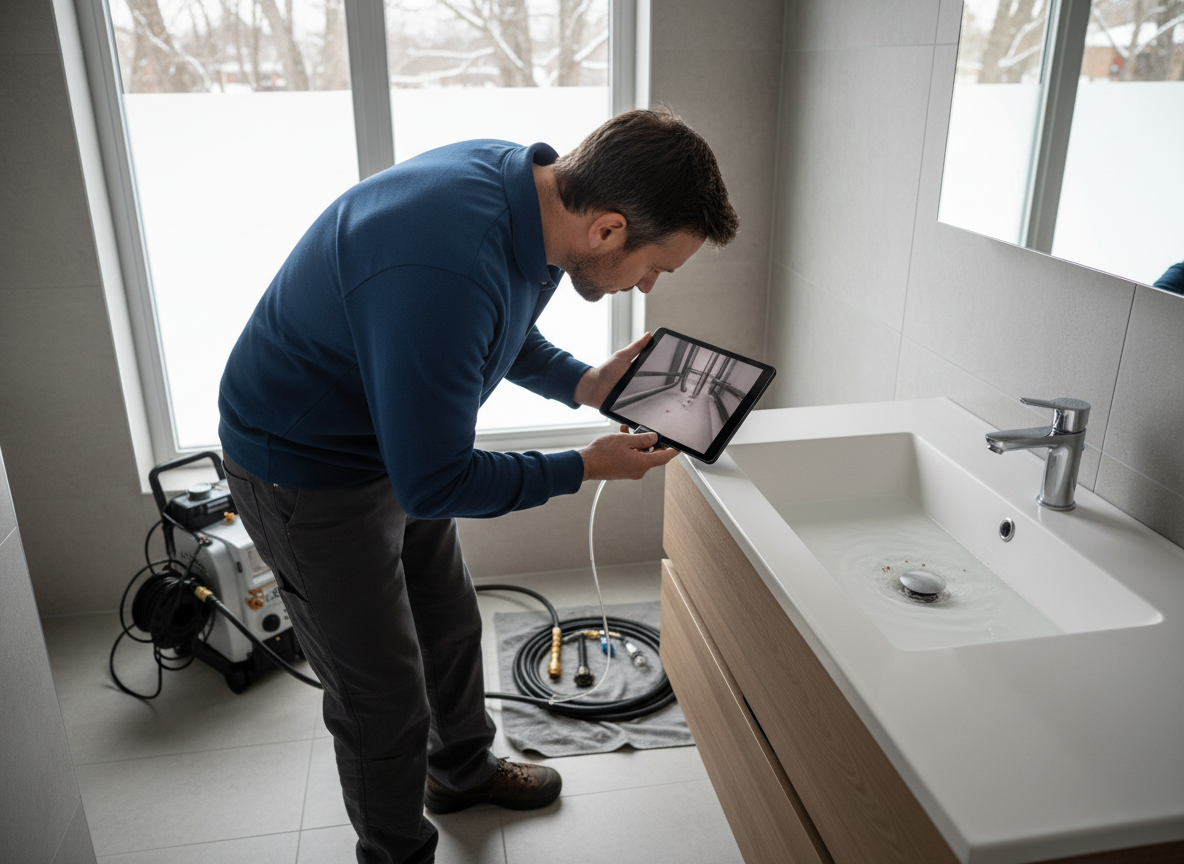
A slow bathroom sink may seem minor. Gurgling or water backing up into other fixtures warrants a professional assessment. These symptoms can indicate a drainage problem. A plumber can assess the cause and recommend the right clearing method.
People Also Ask
What Is Drain Snaking?
Drain snaking uses a flexible cable to break up or retrieve certain blockages. Its suitability depends on the obstruction and pipe condition.
Is Drain Snaking Better Than a Chemical Drain Cleaner?
The suitable clearing method depends on the blockage and pipe condition. Ask a plumber to assess persistent drainage problems.
Can a Plunger Replace a Drain Snake?
A plunger may help with some fixture clogs. For persistent or shared drainage problems, assess the issue before choosing a clearing method.
The signs below help Richmond Hill homeowners and landlords recognize drainage problems that may need professional attention.
Water Backing Up Into Another Fixture
Water backing up into another fixture can indicate a restriction in a shared drain line. A plumber can locate the problem. A note of which fixture was in use and where the water appeared gives the technician a useful starting point.
Gurgling Sounds After a Flush
Gurgling can accompany drainage or venting problems. A plumber can investigate the cause, especially when other fixtures are affected. A note of where the sound comes from and when it happens helps narrow the search.
Several Fixtures Draining Slowly
Several slow drains may indicate a shared drainage problem. A plumber can identify a suitable access point and clearing method. A list of the affected fixtures, such as a tub, a sink, and a laundry drain, helps the technician plan the visit.
Clogs That Keep Returning
Recurring clogs warrant further assessment. Possible causes include remaining buildup, roots, or pipe defects. A simple record of when each clog happened and which drain was affected helps a plumber see the pattern. In hard water areas, soap scum and mineral scale can add to that buildup, as this guide to water softener installation and plumbing care explains.
Standing Water in a Basement Floor Drain
Water pooling around a basement floor drain or rising from its opening warrants assessment. Water held inside the trap is normal. Until the cause is identified, homeowners can limit heavy water use, such as laundry loads and long showers. Homes with a sump pit should also confirm the pump is working, and this comparison of pedestal vs. submersible sump pumps covers the main options.
Odours Rising From Kitchen or Bathroom Drains
Drain odours can have several causes, including buildup, a dry trap, or venting problems. The appropriate response depends on the cause. A plumber can check the trap, the drain, and the venting to find the source.
Store Bought Cleaners No Longer Clearing the Line
If drainage problems persist after using a cleaner, arrange an assessment. Tell the plumber which product was used before work begins. That information helps the technician choose safe handling and suitable equipment.
What a Professional Snaking Visit Involves
A typical visit starts with questions about symptoms and which fixtures are affected. The technician selects equipment based on the affected drain, suspected obstruction, access, and pipe condition. After clearing, the technician runs water through the system to confirm proper flow. A video camera inspection may follow when clogs keep returning.
When Snaking Is Not the Right Fix
Snaking cannot repair damaged pipes. Inspection findings help determine whether further cleaning, root removal, repair, or replacement is appropriate. Pipes in cold areas can also freeze rather than clog, so it helps to know where to check for frozen pipes in older homes.
Book a Drain Snaking Visit
Gurgling, slow drains, recurring clogs, pooling water, and drain odours can all signal drainage problems. J.A. Plumbing Inc. can assess the symptoms and recommend suitable next steps. Book drain services in Richmond Hill to arrange an assessment.
Frequently Asked Questions
Can Snaking Damage Older Drain Pipes?
Pipe condition affects the risks of mechanical clearing. A plumber can assess whether inspection is needed before selecting equipment.
What Causes the Same Drain to Clog Repeatedly?
Possible causes include remaining buildup, grease, root intrusion, or pipe defects. An assessment can help identify the cause.
Can Tree Roots Cause a Drain to Need Snaking?
Yes. Roots can grow into older sewer lines and catch debris. If they keep coming back, J.A. Plumbing Inc. may recommend sewer line repair.
Is It Safe to Snake a Drain Yourself?
A small hand auger can clear a simple sink clog. Deeper or repeat blockages need a professional, because forcing a snake can damage older pipes.