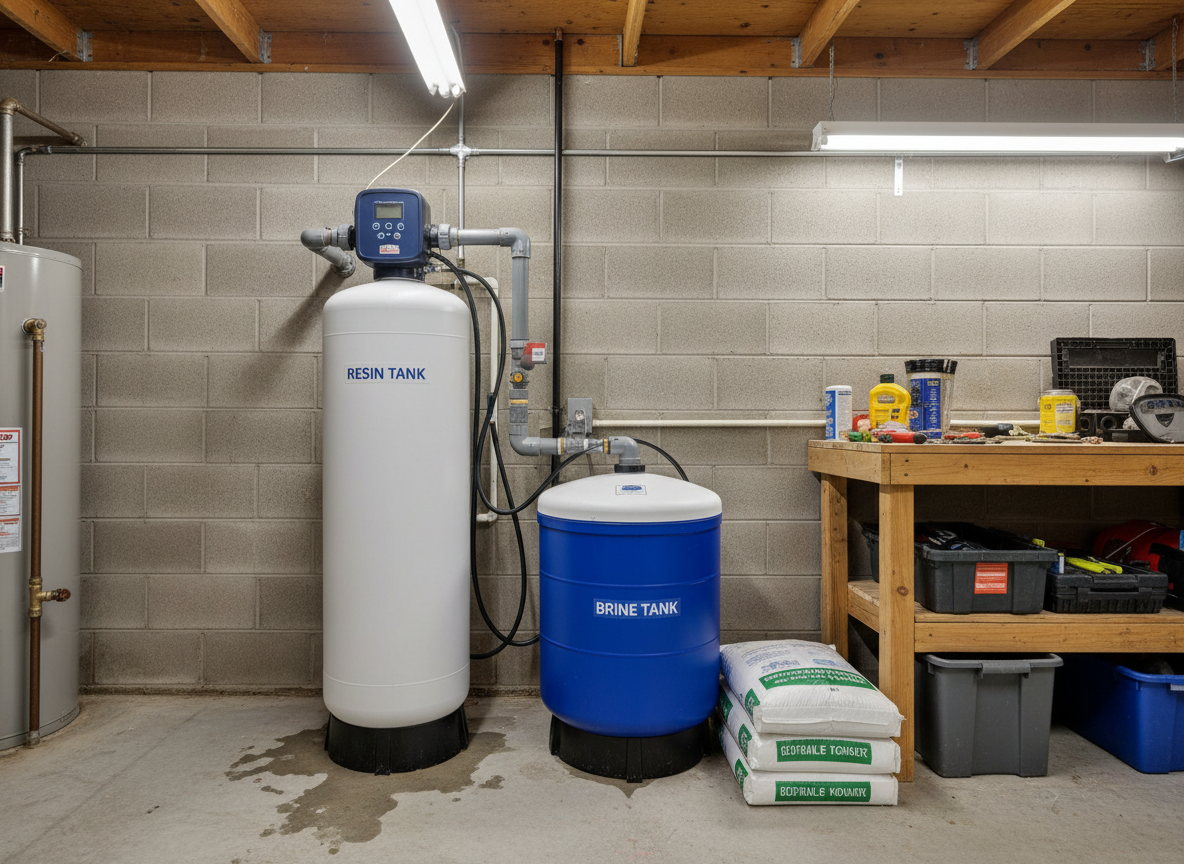
Many homeowners notice white residue on faucets, cloudy glassware, or reduced water pressure without realizing hard water may be the cause. Over time, minerals in the water can build up inside pipes, fixtures, and appliances, leading to reduced efficiency, higher maintenance costs, and premature equipment failure. Residential water softener installation helps address these issues by reducing mineral buildup before it affects the plumbing system.
A properly installed water softener removes hardness minerals such as calcium and magnesium from the water supply. This helps protect plumbing components, improves appliance performance, and supports the long-term reliability of household water systems.
People Also Ask
How does a residential water softener reduce scale buildup?
A residential water softener removes calcium and magnesium from the water supply through ion exchange. This helps prevent mineral deposits from forming inside pipes, fixtures, and appliances, reducing scale-related problems over time.
Is installing a residential water softener worth it for homeowners?
Many homeowners find that water softeners help extend appliance lifespan, improve water heater efficiency, reduce plumbing maintenance, and minimize hard water stains on fixtures and surfaces.
Why Hard Water Creates Plumbing Problems
Hard water contains dissolved minerals that remain behind when water evaporates or passes through plumbing. These minerals gradually form scale deposits inside pipes, fixtures, and appliances.
Common signs of hard water include:
- White buildup on faucets and showerheads
- Reduced water pressure
- Spots on dishes and glassware
- Stiff or faded laundry
- Frequent appliance maintenance
- Reduced water heater efficiency
Although these problems may seem minor initially, they often become more costly over time as scale continues to accumulate throughout the plumbing system.
How Residential Water Softener Installation Prevents Scale
Residential water softener installation works through a process called ion exchange. As water passes through the system, calcium and magnesium are removed and replaced with sodium ions.
This process helps prevent scale from forming on plumbing surfaces and inside appliances.
Benefits of Reducing Scale Buildup
When scale is controlled, homeowners often experience:
- Better water flow throughout the home
- Improved water heater performance
- Cleaner faucets and showerheads
- Longer appliance lifespan
- Fewer plumbing repairs
- Reduced maintenance requirements
Rather than addressing individual plumbing issues as they appear, water softening treats the source of the problem before mineral buildup can spread through the system.
Protecting Household Appliances from Premature Wear
Many household appliances depend on consistent water flow and efficient heat transfer. Hard water can interfere with both.
Appliances that often benefit from softened water include:
- Water heaters
- Dishwashers
- Washing machines
- Coffee makers
- Humidifiers
Scale buildup forces these appliances to work harder, increasing energy consumption and placing additional strain on internal components. Over time, this can shorten equipment lifespan and increase repair costs.
By reducing mineral accumulation, a water softener helps appliances operate more efficiently and remain in service longer.
What Happens During Home Water Softener Installation
Home water softener installation begins with an assessment of the home’s plumbing system and water conditions. Proper sizing is important because every household has different water usage patterns and hardness levels.
During installation, technicians evaluate:
- Water hardness levels
- Household water demand
- Available installation space
- Drainage requirements
- Plumbing layout and accessibility
The system is then connected to the main water supply so that hardness minerals are removed before water reaches household fixtures and appliances.
Correct calibration is equally important. Settings should match household usage patterns to ensure efficient operation and minimize unnecessary water or salt consumption.
Why Professional Installation Matters
A water softener can only perform effectively when it is properly sized and installed. Poor installation may reduce efficiency, increase maintenance needs, or fail to provide complete hardness removal.
Professional installation helps ensure:
- Proper system sizing
- Accurate calibration
- Compliance with local plumbing codes
- Reliable long-term performance
- Easier future maintenance
Investing in professional installation helps maximize the value and effectiveness of the water treatment system.
Also Read:
Salt-Based vs Salt-Free Systems for Water Softener Installation
What Water Softeners Mean for Residential Appliance Lifespan
Commercial Water Softener Installation: Key Considerations for Plumbing Professionals
A Smarter Approach to Long-Term Plumbing Protection
Scale buildup does not happen overnight, but its effects can impact plumbing systems, fixtures, and appliances for years. Residential water softener installation provides a practical way to reduce mineral deposits, improve efficiency, and support longer equipment lifespan throughout the home.
J.A. Plumbing Inc., based in Richmond Hill and serving the Greater Toronto Area, provides residential water softener installation with a focus on proper sizing, clean installation, and long-term reliability. Fully insured and WSIB certified, J.A. Plumbing Inc. also offers a market-leading 2- to 3-year warranty on applicable services.
Contact J.A. Plumbing Inc. today to schedule a residential water softener assessment and determine the right solution for long-term plumbing protection.