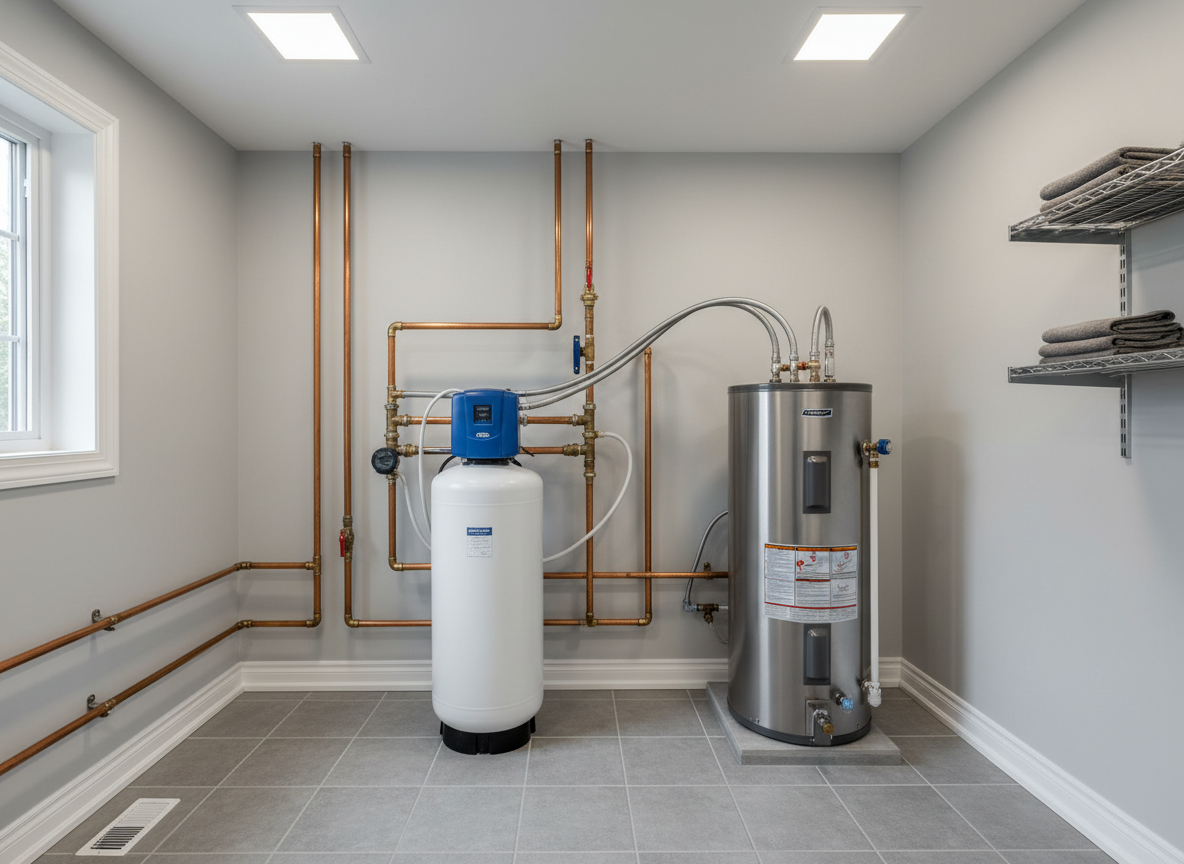
Hard Water Problems Often Start Quietly but Become Expensive Fast
Mineral-heavy water can slowly damage plumbing systems without showing immediate warning signs. Scale buildup inside pipes, water heaters, and fixtures often reduces efficiency over time and increases repair costs. Many homeowners notice declining water pressure, dry skin, appliance wear, and stubborn residue before realizing hard water is the source of the problem.
Choosing the right approach for water softener installation can help reduce long-term plumbing stress and improve system performance. Salt-based and salt-free systems both address hard water concerns, but they operate differently and suit different property conditions.
Richmond Hill Water Conditions and System Performance
Understanding Local Hard Water Challenges
Richmond Hill and surrounding GTA communities experience moderate to high mineral content in residential water supplies. Calcium and magnesium deposits can accumulate inside plumbing infrastructure over time. This buildup often affects water heaters, faucets, dishwashers, and laundry equipment.
Older residential plumbing systems may experience stronger scale accumulation due to pipe age and internal narrowing. Mineral deposits can also reduce heating efficiency, leading to higher utility usage during colder months.
How Salt-Based and Salt-Free Systems Work
Salt-based systems remove hardness minerals through ion exchange. Resin beads capture calcium and magnesium while replacing them with sodium ions. This process actively extracts hardness minerals from the water supply and helps reduce severe scale buildup inside plumbing systems.
Salt-free systems use a crystallization process instead of mineral removal. The minerals remain present but are altered to reduce their ability to stick to pipe surfaces. These systems mainly focus on minimizing scale formation rather than fully softening the water.
Comparing Costs and Long-Term Value
Initial Equipment and Setup Investment
Salt-based systems generally involve higher installation complexity because they require drainage connections, brine tanks, and regeneration cycles. Professional setup costs may increase depending on plumbing access and available space within the property.
Salt-free systems often involve a simpler installation process with fewer mechanical components. However, the overall value depends heavily on the severity of local water hardness and plumbing usage patterns. In areas with significant mineral buildup, salt-based water softener installation may provide stronger long-term efficiency improvements.
Long-Term Efficiency and Appliance Protection
Hard water can shorten the lifespan of water heaters, washing machines, and plumbing fixtures. Scale accumulation forces appliances to work harder and reduces energy efficiency over time. Many homeowners consider appliance protection a major factor when evaluating system return on investment.
Salt-based systems typically deliver stronger protection in homes experiencing heavy mineral deposits. Salt-free home water softener installation may still help reduce maintenance concerns in properties with moderate hardness levels and lower scaling activity.
Ongoing Operational Expenses
Salt-based systems require ongoing salt purchases and occasional electricity use during regeneration cycles. Maintenance also includes monitoring brine tank levels and periodic servicing. Rising utility conservation efforts have increased interest in systems that balance water treatment performance with operational efficiency.
Salt-free systems eliminate salt replacement and usually operate without regeneration cycles. These systems may reduce maintenance involvement while lowering water waste associated with traditional regeneration processes.
Maintenance and Plumbing Inspection Alignment for Water Softener Installation
Salt-Based System Maintenance Expectations
Salt-based systems require routine monitoring to maintain consistent mineral removal performance. Brine tanks need periodic refilling, and resin beds may require servicing depending on water conditions and household usage patterns.
Regular plumbing inspections help identify scale accumulation, drainage concerns, and system wear before larger problems develop. Maintenance intervals are usually spread across routine seasonal service schedules rather than constant attention.
Salt-Free System Simplicity
Salt-free systems operate without regeneration cycles or drainage discharge requirements. The absence of salt handling and wastewater discharge simplifies long-term operation for many households.
Plumbing inspections remain important because local water conditions can influence performance over time. Periodic evaluations help ensure that treatment systems continue to support appliance efficiency and plumbing longevity.
Verdict: Booking a Water Softener Installation Service
Matching the System to the Property
The right system depends on the severity of water hardness, the condition of the plumbing infrastructure, and long-term maintenance preferences. Properties with heavy mineral buildup often benefit more from full mineral-extraction systems. Homes with moderate scaling concerns may find salt-free alternatives suitable for reducing surface buildup.
Professional evaluation becomes especially important in older Richmond Hill homes, where the plumbing infrastructure may already show signs of internal mineral buildup.
Also Read:
What Water Softeners Mean for Residential Appliance Lifespan
Unlicensed vs Licensed Plumbers in Aurora for Winter Water Softener Installs
Working with J.A. Plumbing Inc.
J.A. Plumbing Inc. continues to support residential plumbing needs across Richmond Hill and the GTA. The company is fully insured, WSIB certified, and backs qualifying work with multi-year warranty protection. Fast emergency response times during working hours also help homeowners address urgent plumbing concerns quickly.
Properties experiencing recurring scale buildup or declining plumbing efficiency can contact J.A. Plumbing Inc. to book a professional water softener installation and determine the most practical solution for long-term system performance.