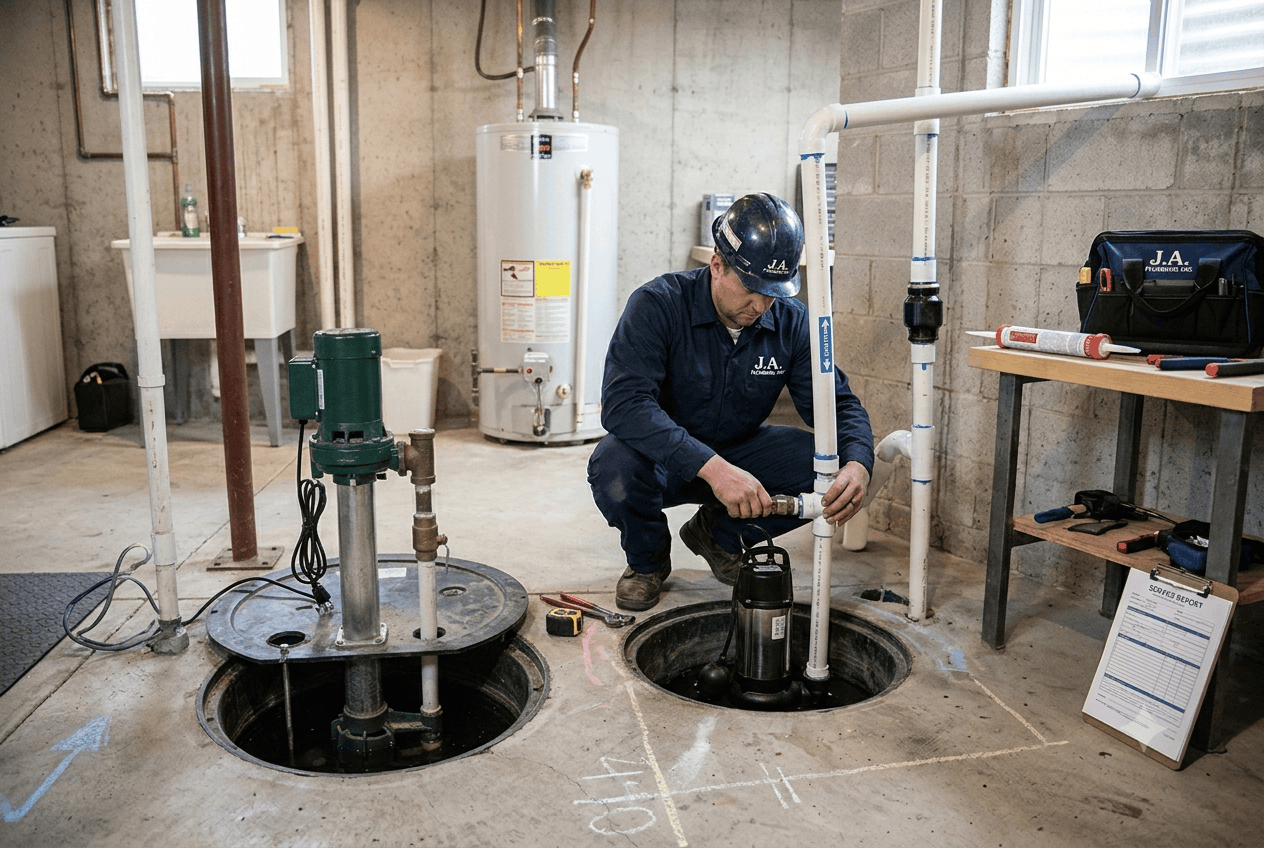
A sump pump rarely gets attention until the night it has to work. When assessing basement water protection, the pump, pit, discharge arrangement, and power supply all warrant attention.
Pedestal and submersible sump pumps do the same job. Both pull groundwater out of a sump pit and send it away from the foundation. They differ mainly in where the motor sits and how each unit fits the pit. Homeowners planning sump pump installation across the GTA benefit from knowing those differences first.
People Also Ask
What Is the Difference Between a Pedestal and a Submersible Sump Pump?
The main difference is where the motor sits. A pedestal pump keeps its motor on a column above the pit. A submersible pump sits fully inside the pit. Both remove groundwater and discharge it away from the foundation.
Which Sump Pump Is Quieter for a Finished Basement?
Noise depends on the pump model, installation, pit cover, and vibration. A submersible pump runs inside the pit, so a sealed cover can help muffle its sound. Compare the operating noise of each model before choosing.
Can a Pedestal Sump Pump Be Replaced With a Submersible Model?
Often, yes, but the existing pit must suit the new pump. A plumber should confirm the pit dimensions, float clearance, and discharge arrangement before the swap.
How a Pedestal Sump Pump Works
A pedestal sump pump mounts its motor on a column above the pit, with the pump base in the water. A float switch controls operation as the water level changes. The switch arrangement depends on the model.
How a Submersible Sump Pump Works
A submersible sump pump is designed for operation within the sump pit. Follow the manufacturer’s installation requirements. A float switch starts the pump as the water rises. Access requirements depend on the pit cover, pump model, and work required.
Noise and Space Differences
Noise depends on the pump model, installation, pit cover, and vibration. Compare operating noise and clearance requirements for the models under consideration.
Quiet operation often matters more in a finished basement or basement apartment than in an unfinished utility room. Space around the pit also affects installation and service access.
Pit Size and Installation Requirements
Pit size often shapes the choice. Confirm the required pit dimensions and float clearance for the selected model.
Have the existing pit assessed for compatibility before selecting a replacement pump. Have a plumber review the discharge arrangement, check valve requirements, and potential freezing exposure. Homes with a water softener should also confirm where its regeneration discharge goes, as this guide to water softener installation and plumbing care explains.
Handling Heavy Water Volumes
A pump that cannot keep pace with incoming water offers little basement flooding protection. Compare rated pumping capacity at the required discharge height and the manufacturer’s limits for solids handling.
Ask a plumber to assess incoming water flow, discharge height, and piping requirements when selecting capacity. In winter, exterior discharge lines are also among the places to check for frozen pipes in older homes.
Maintenance and Service Life
A pedestal motor sits above the water, while a submersible motor operates within the pit. Maintenance requirements depend on the model and operating conditions.
Changes in cycling, unusual noise, visible corrosion, or failure to discharge water warrant assessment. These signs can point to a need for sump pump repair.
What to Compare Before Choosing a Pump
No single pump type suits every basement. The right choice comes down to model specific criteria.
| Selection criterion | What to confirm |
|---|---|
| Pit dimensions | Required pit size and float clearance for the model |
| Pumping capacity | Rated capacity at the required discharge height |
| Solids handling | Manufacturer’s limits for debris |
| Noise and clearance | Operating noise and space needed around the unit |
| Service access | Access needed through the pit cover for planned work |
| Backup compatibility | Whether a backup system can pair with the primary pump |
Landlords adding a basement apartment should review these criteria with quiet operation and reliable capacity in mind.
Adding a Backup Pump for Outages
Consider how the sump system will operate during a power outage. A compatible backup sump pump may provide pumping during an outage or primary pump failure, within its operating limits.
Ask whether backwater valve installation is appropriate for the property’s drainage arrangement and sewer backup risks. Slow fixtures or water rising from a floor drain can point to other drainage problems, so review these signs a drain may need snaking.
Book a Sump Pump Assessment
Choose a pump that matches the pit, incoming water flow, and discharge requirements. Discuss backup options during the assessment.
Contact J.A. Plumbing Inc. to book a sump pump assessment.
Frequently Asked Questions
Can Softener Discharge Drain Into a Sump Pit?
Have a plumber confirm the permitted discharge connection and any required air gap before connecting a water softener.
How Often Should a Sump Pump Be Tested?
Follow the manufacturer’s testing schedule. Confirm that the pump starts, discharges water, and stops at the intended level.
Does a Sump Pump Need a Check Valve?
A check valve stops pumped water from flowing back into the pit. A plumber can confirm whether the discharge line needs one.
Why Does a Sump Pump Run When It Is Not Raining?
High groundwater, snowmelt, or a stuck float switch can keep a pump cycling. Have a plumber assess frequent cycling.