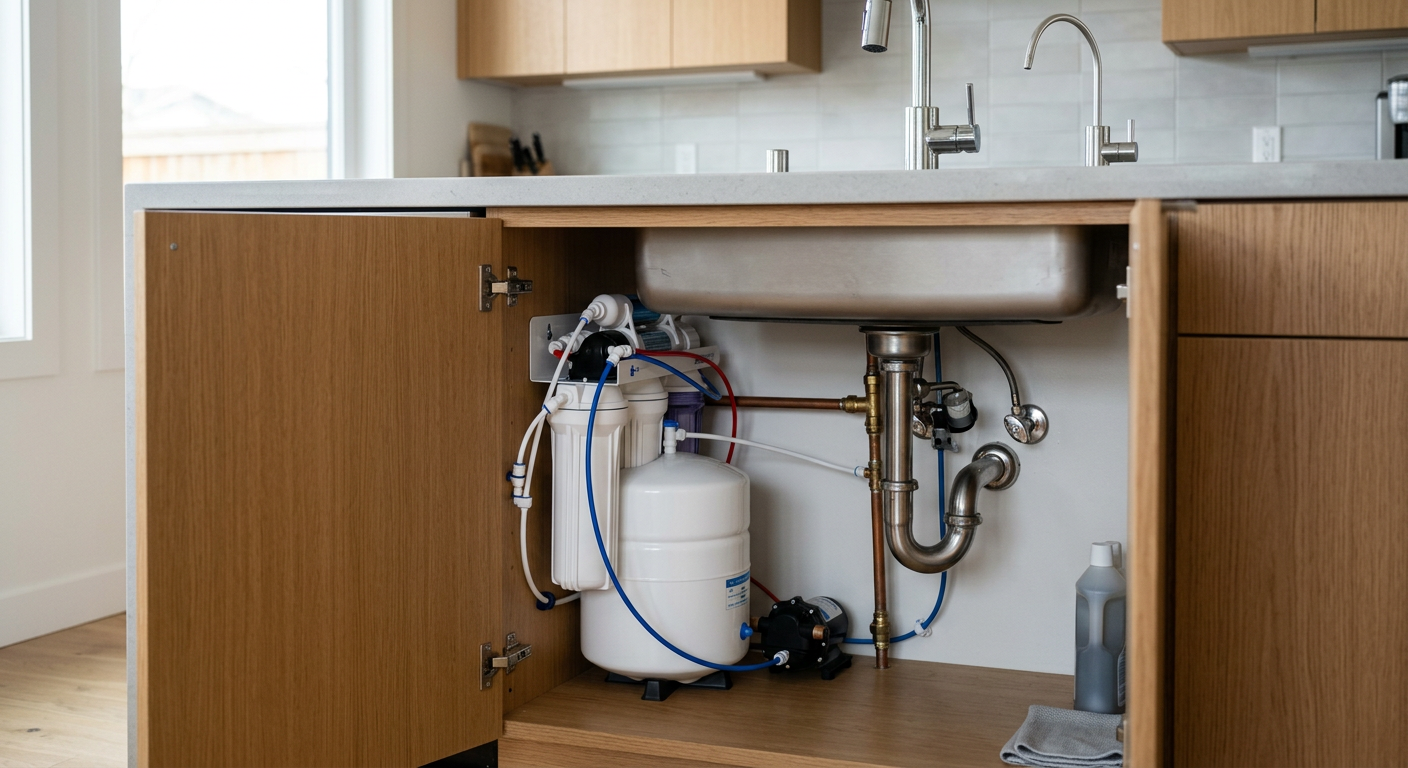
Water that appears clear can still contain dissolved contaminants that affect taste, safety, and long-term plumbing performance. Many households across the GTA deal with mineral-heavy water, sediment buildup, and aging infrastructure that compromise water quality. Over time, this leads to scale accumulation, appliance wear, and concerns around drinking water safety.
A reverse osmosis water filter system addresses these issues effectively. It removes impurities at a molecular level and delivers cleaner, more consistent water for daily use.
People Also Ask
Is reverse osmosis water safe for daily use?
Yes. A reverse osmosis water filtration system removes harmful contaminants, making water safer for regular consumption and household use.
How often should reverse osmosis filters be replaced?
Pre- and post-filters typically require replacement every 6 to 12 months, while the membrane may last 2 to 3 years, depending on usage and water quality.
How a Reverse Osmosis Water Filter Works
A reverse osmosis water filter works by forcing water through a semi-permeable membrane. This membrane blocks contaminants while allowing clean water to pass through.
Key stages in a reverse osmosis drinking water system:
- Pre-filtration removes sediment and chlorine
- Membrane filtration blocks dissolved solids and contaminants
- Post-filtration improves taste and clarity
This multi-stage approach makes a RO water filter system effective for residential water filtration installation where water quality varies.
What a Reverse Osmosis Water Filtration System Removes
A reverse osmosis water filter system removes a wide range of contaminants that standard filters often miss.
Common contaminants removed:
- Lead and heavy metals
- Chlorine and chemical residues
- Dissolved salts and minerals
- Bacteria and microorganisms
- Nitrates and fluoride
This level of filtration supports safer drinking water and reduces exposure to unwanted substances.
Why Water Purity Matters for Homes
Water quality directly impacts household systems and daily routines. Poor water purity can lead to:
- Scale buildup in pipes and fixtures
- Reduced the efficiency of water heaters and appliances
- Unpleasant taste and odour in drinking water
- Increased maintenance costs over time
A properly installed RO drinking water system helps reduce these risks and supports consistent water quality across the home.
Reverse Osmosis vs Other Water Filtration Methods
Not all filtration systems deliver the same results. Comparing reverse osmosis with other methods highlights its advantages.
Standard filtration systems:
- Remove larger particles and some chemicals
- Limited effectiveness against dissolved contaminants
Reverse osmosis water filtration system:
- Remove microscopic contaminants
- Provide higher purification levels
- Deliver consistent results across varying water conditions
For households that require deeper filtration, an RO water filter system offers a more comprehensive solution.
Signs a Home Needs a Reverse Osmosis Water Filter
Certain signs suggest the need for improved filtration through a reverse osmosis water filter.
Common indicators include:
- White residue on faucets and glassware
- Metallic or chlorine taste in water
- Frequent appliance maintenance due to scale
- Concerns about municipal water quality
In regions like Richmond Hill, water hardness and infrastructure can vary. This is where a reverse osmosis system helps address these concerns.
Where a Reverse Osmosis Water Filtration System Is Installed
A reverse osmosis water filtration system is typically installed at key points of use.
Common installation areas:
- Under kitchen sinks for drinking water
- Dedicated drinking water taps
- Integration with refrigerators or ice makers
Professional water filtration installation ensures proper system setup and consistent performance.
Maintenance Requirements for Reverse Osmosis Systems
Routine maintenance is essential for keeping a reverse osmosis drinking water system functioning properly.
Maintenance tasks include:
- Replacing pre- and post-filters periodically
- Inspecting the membrane for wear
- Sanitizing the system to prevent buildup
Regular servicing supports system longevity and maintains water quality standards.
Also Read:
Plumbing Checklist Essentials for Moving Into a New Home
Older Home Plumbing Problems That Require Licensed Plumbers
The Real Difference Between ABS and PVC Plumbing in Richmond Hill
How Reverse Osmosis Supports Long-Term Water Safety
Clean water plays a critical role in maintaining household efficiency and safety. A reverse osmosis water filtration system provides long-term benefits by reducing contaminants and maintaining consistent filtration performance. It supports healthier water consumption, protects plumbing systems, and minimizes maintenance issues caused by mineral buildup.
For households across the GTA, investing in a reverse osmosis water filter helps ensure safer, cleaner water for daily use.
J.A. Plumbing Inc., based in Richmond Hill, Ontario, provides residential and commercial plumbing services across the GTA. The team is fully insured and WSIB certified. Service response times are structured to efficiently address urgent plumbing needs.
For reliable water filtration installation, contact J.A. Plumbing Inc. to ensure proper system installation and maintenance.