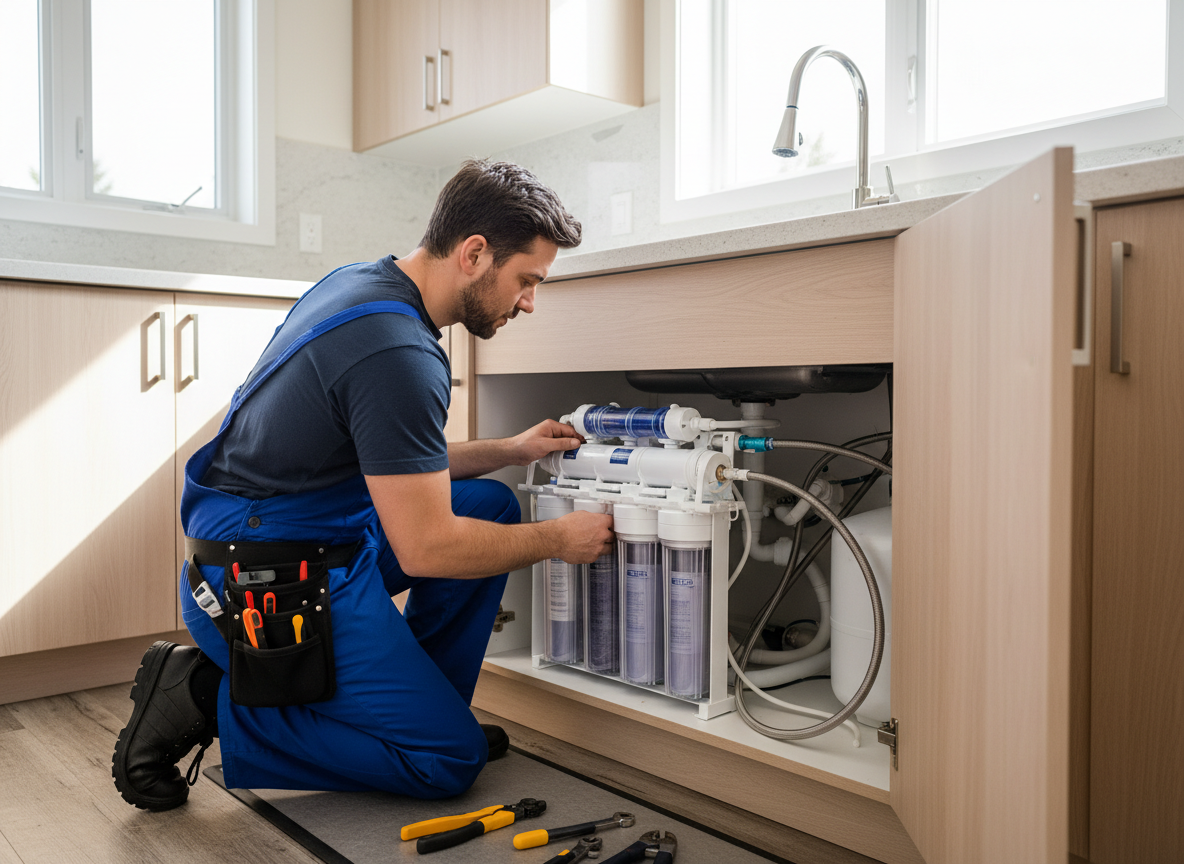
Municipal Water Challenges and RO Water Filter System Solutions
Tap water quality concerns are becoming more common across Canadian households. Chlorine taste, hard water buildup, and lingering odours often affect daily water use and long-term plumbing performance. Over time, mineral-heavy water can leave scale deposits inside faucets, fixtures, and water-using appliances, leading to reduced efficiency and avoidable maintenance issues.
Many homeowners now look for purification systems that go beyond standard filtration. A professionally installed RO water filter system helps address dissolved contaminants. It also improves drinking water quality and reduces the impact of hard water on residential plumbing components.
People Also Ask
What does a reverse osmosis water filter system remove?
A reverse osmosis water filter system helps reduce dissolved minerals, chlorine, sediment, and other impurities that may affect the taste and quality. Multi-stage filtration also supports improved purification performance.
How often should RO water filters be replaced?
Prefilters usually require replacement more frequently because they capture sediment and chlorine before water reaches the membrane. Membranes generally last longer, depending on household water quality and usage patterns.
Identifying Hard Water and Chlorine Issues
Municipal treatment systems often rely on chlorine to disinfect water supplies. While necessary for safety, chlorine can leave behind an unpleasant taste or smell. Rising concerns around chlorine taste have also increased interest in advanced residential filtration systems.
Common signs of water quality issues include:
- White mineral buildup around faucets and showerheads
- Dry skin and residue after washing
- Metallic or chemical taste in drinking water
- Lingering odours from kitchen taps
- Reduced efficiency in water-using fixtures
Hard water minerals can also contribute to scale accumulation inside plumbing lines. Over time, this buildup may affect water flow and increase wear on household fixtures.
The Limitations of Standard Filtration
Basic filtration systems help reduce sediment and some impurities, but standard filters often miss dissolved minerals and microscopic contaminants. This creates challenges when water contains persistent taste and odour concerns.
For example, carbon-only filters may temporarily improve chlorine taste while leaving behind dissolved solids that continue to affect water quality. Advanced purification layers are often necessary when lingering odours or mineral-related issues remain noticeable after basic filtration.
How a Reverse Osmosis Drinking Water System Purifies Tap Water
Modern reverse osmosis systems use multiple purification stages to improve water quality before it reaches drinking taps.
Multi-Stage Pre-Filtration and Membrane Technology
A professional RO water filter system commonly includes:
- Sediment prefilters
- Carbon filtration layers
- Reverse osmosis membrane purification
- Post-filtration polishing stages
Carbon filters play an important role by blocking chlorine before water enters the membrane stage. This helps protect membrane performance and supports long-term system efficiency.
The membrane itself is designed to deliver exceptional rejection rates for dissolved contaminants. This process helps reduce unwanted minerals, impurities, and particles that may affect taste and overall water quality.
Wastewater Ratios and Environmental Considerations
Earlier generations of reverse osmosis systems often produced higher drain-water output during filtration. Modern systems now focus on optimizing drain water efficiency while maintaining reliable purification performance.
Professional installation also helps ensure proper drain routing and balanced water pressure, both of which support efficient operation and reduce unnecessary wastewater concerns.
What to Expect During Professional RO Water Filter System Installation
Professional installation of a reverse osmosis drinking water system involves more than connecting a filter beneath a sink. Proper planning helps ensure reliable operation, safe drainage, and consistent water flow.
Assessing Feed-Water Limits and Pressure Requirements
Plumbing professionals first evaluate household water conditions before installing the system. This includes reviewing:
- Incoming water pressure
- Water hardness levels
- Available installation space
- Drain connection placement
- Existing plumbing layout
Routing tubing and drain connections safely is an important part of the installation process. Poor routing can lead to leaks, drainage issues, or inconsistent filtration performance.
Proper pressure management is equally important, as reverse osmosis systems rely on optimal pressure settings for consistent flow and effective purification.
The Value of Certified Plumbing Expertise
Professional installation helps reduce the risk of leaks, poor drainage, or incorrect filtration setup. It also supports proper integration with existing residential plumbing systems.
J.A. Plumbing Inc. uses WSIB-certified technicians for residential plumbing services across the Greater Toronto Area. Certified installation also helps homeowners secure comprehensive multi-year warranty protection for added peace of mind.
Maintenance Requirements for RO Water Filter System Longevity
Routine maintenance helps maintain water quality and extend the lifespan of filtration components.
Routine Cartridge and Membrane Replacement Schedules
Prefilters typically require more frequent replacement because they capture sediment and chlorine before water reaches the membrane stage. Membranes generally offer a longer lifespan than prefiltration components when systems are properly maintained.
Maintenance schedules often depend on:
- Household water usage
- Incoming water quality
- Hard water conditions
- Filter capacity
Replacing worn components on time helps maintain filtration performance and supports reliable water flow.
System Sanitization and Performance Testing
Professional servicing may also include:
- Periodic flushing of the system
- Sanitizing internal components during filter replacement
- Inspecting tubing and drain connections
- Testing purification efficiency
Performance testing helps confirm optimal total dissolved solids rejection and ensures the system continues operating as intended.
Upgrading Residential Water Filtration Systems with Water Filter Services
Evaluating Household Purification Needs
Every household faces different water quality conditions. Some homes benefit from targeted drinking water filtration, while others may require broader water treatment support.
A common residential setup includes pairing water softeners with dedicated reverse osmosis drinking taps. This combination helps reduce scale buildup while improving drinking water quality at key access points.
Rapid emergency plumbing response also remains important when filtration systems experience leaks, pressure issues, or drainage concerns.
Professional Integration and Reliability
Professional installation helps ensure reverse osmosis systems integrate correctly with existing plumbing infrastructure. Proper setup supports long-term reliability, consistent performance, and safer water filtration operation.
For homeowners considering residential water purification upgrades, professional guidance can help identify practical filtration solutions that align with household water conditions.
Contact J.A. Plumbing Inc. to schedule Ontario water filter services and solutions with certified professionals.