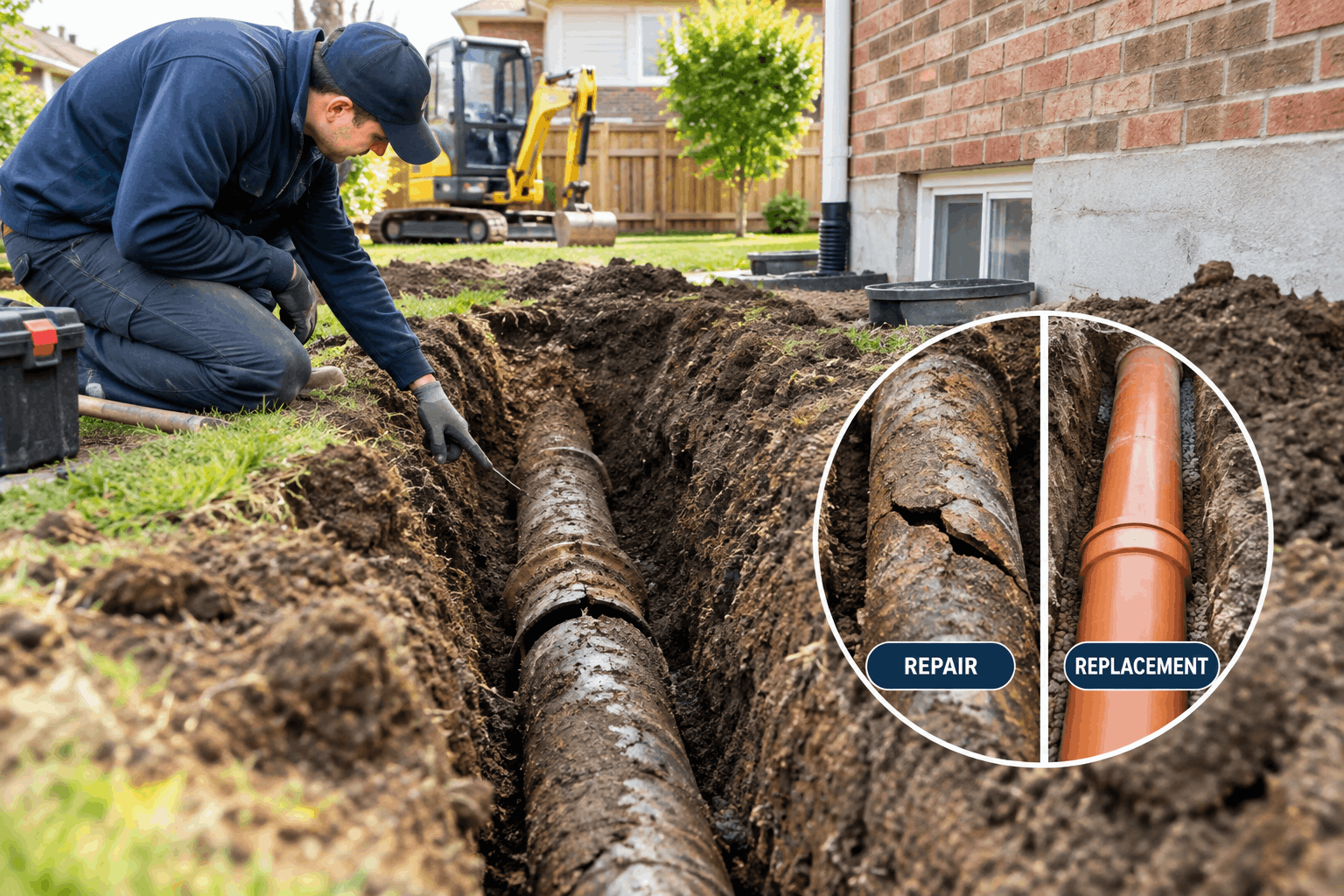
A slow drain may initially seem like a routine clog. Drain cleaning might restore flow for a short time, but the problem can return. A sewer camera inspection may then reveal damage within the lateral line rather than a blockage near the fixture.
At that point, the decision becomes more significant: would complete sewer line replacement provide a more reliable solution, or does the sewer line require a targeted repair?
The answer depends on the pipe’s condition, material, damage pattern, and repair history. A qualified plumber should inspect the line before recommending either option.
What Determines Sewer Line Repair vs. Replacement?
No single warning sign determines whether a sewer line needs repair or replacement. Plumbers generally consider several factors together.
Pipe Age and Material
Older GTA homes may have sewer laterals made from clay, cast iron, or other materials that deteriorate over time. Clay pipes can develop displaced joints and root intrusion. Cast iron can corrode, crack, or lose structural strength.
An older pipe does not automatically require replacement. However, extensive deterioration across several sections can make repeated repairs less practical.
Extent of the Damage
A small crack in one accessible section may support a focused sewer line repair. Damage throughout much of the lateral may require replacement.
A sewer camera inspection helps identify whether the problem is isolated or spread throughout the pipe.
Location of the Problem
The damaged section’s location can affect the available repair method. Pipes may run beneath driveways, landscaping, basement floors, or other finished areas.
Access limitations can influence whether traditional excavation or a trenchless sewer repair method is suitable.
Frequency of Backups
A single blockage may result from a temporary obstruction. Frequent backups, slow drainage, or recurring sewage odours may point to a deeper structural problem.
Past service records can help determine whether the same section continues to fail.
Signs a Sewer Line Repair Is Usually Enough
A repair may provide an effective solution when most of the lateral remains structurally sound.
Possible repair situations include:
- One isolated crack
- A separated joint in a limited area
- A single blockage that has not caused pipe failure
- Minor root intrusion confined to one section
- Localized damage with stable pipe on both sides
- A relatively sound pipe with no history of repeated backups
The inspection must still confirm the pipe’s overall condition. Repairing one visible defect will not solve hidden deterioration farther along the line.
Signs Replacement Is the More Realistic Option
Sewer line replacement may offer a more dependable result when deterioration affects much of the pipe.
Replacement may become necessary when an inspection finds:
- Multiple cracks or displaced joints
- Widespread tree-root intrusion
- Collapsed or severely deformed pipe sections
- Advanced corrosion in cast iron piping
- Deteriorated clay pipe across much of the lateral
- Recurring backups despite previous cleaning or repairs
- Several damaged areas that would require repeated excavation
Replacement addresses the failing line as a complete system. It can reduce the likelihood that another weakened section will create a new problem shortly after an isolated repair.
What Does Each Process Involve?
Both sewer line repair and replacement should begin with diagnosis rather than excavation.
Sewer Line Repair
A plumber may inspect the lateral with a sewer camera and locate the damaged section. The repair method then depends on the defect, pipe material, depth, and accessibility.
A localized repair may involve excavating a smaller area and replacing the affected pipe section. Some properties may qualify for trenchless sewer repair, which can reduce surface disruption. Trenchless methods are not appropriate for every collapsed or badly misaligned pipe.
Sewer Line Replacement
Sewer pipe replacement removes or bypasses a line that can no longer provide dependable service. Traditional replacement involves excavating the pipe route and installing a new lateral.
Where site and pipe conditions permit, trenchless technology may replace the line through smaller access points. This approach can limit disruption to landscaping, walkways, and driveways. A site assessment must confirm whether it is technically suitable.
Replacement generally creates more disruption than a small localized repair. However, the selected method, pipe depth, property layout, and access conditions all influence the project.
Choose the Solution Based on the Pipe’s Condition
A recurring sewer problem needs more than an assumption based on symptoms alone. Camera inspection helps determine whether the lateral has a single repairable defect or widespread structural deterioration.
Knowing what to check before hiring a local plumbing company can help property owners evaluate relevant experience, written recommendations, and follow-up arrangements.
Contact J.A. Plumbing Inc. for sewer line repair or replacement across the GTA. A plumbing assessment can identify the source of the problem and determine an appropriate next step.