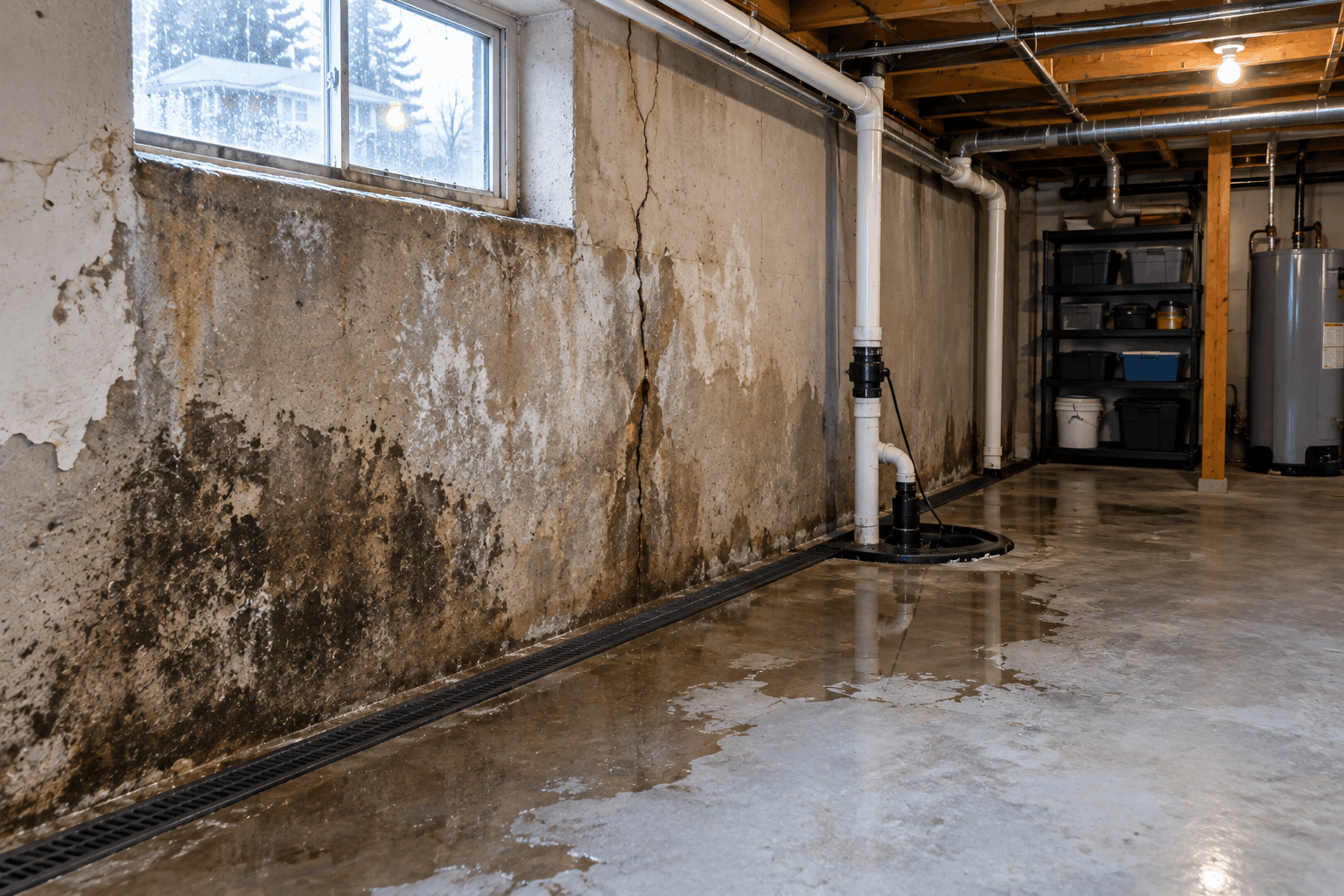
A musty basement smell can seem like a minor issue. A dehumidifier may mask the odour, and the room may remain dry during normal weather. Then, a period of heavy rainfall leaves the carpet soaked and reveals that moisture has been entering the basement for some time.
Basement water problems rarely begin with major flooding. They often produce smaller warning signs first. Recognizing these signs can help GTA property owners address moisture issues before they damage flooring, drywall, insulation, or stored belongings.
1. A Persistent Musty or Damp Smell
A musty odour often indicates excess moisture, even when no water is visible. Moisture may be trapped behind finished walls, beneath flooring, or around the foundation.
Cleaning the room or using an air freshener will not address the underlying source. A professional assessment can determine whether the smell relates to foundation seepage, condensation, plumbing leaks, or poor ventilation.
2. White Mineral Stains on Foundation Walls
White, powdery marks on concrete or masonry are known as efflorescence. These deposits form when moisture moves through the foundation and leaves mineral salts behind as it evaporates.
Efflorescence does not always mean that active flooding will occur. However, it provides visible evidence that moisture has travelled through the wall. Repeated staining should prompt an inspection.
3. Hairline Cracks in the Foundation
Small foundation cracks may develop as concrete cures or a property settles. Not every hairline crack creates an immediate water problem.
However, cracks can provide an entry point when saturated soil places pressure against the foundation. Cracks that widen, remain damp, or develop staining should be assessed before the next heavy rain.
4. Peeling Paint or Bubbling Drywall Near the Floor
Paint that peels, blisters, or separates from a basement wall may indicate moisture behind the surface. Drywall can also swell, soften, or bubble when it repeatedly absorbs water.
Damage concentrated near the floor often suggests seepage at the wall-floor joint. Repainting may hide the symptom temporarily, but the finish can fail again if the moisture source remains.
5. Water Stains or Discolouration
Dark patches, tide marks, or yellow-brown staining can reveal previous water entry. These marks may appear on walls, flooring, baseboards, or around basement corners.
Even dry stains matter. They show where water has travelled and can help a basement waterproofing contractor identify possible entry points.
6. A Sump Pump That Runs Constantly During Rain
A sump pump should activate when water reaches the sump pit. Constant operation during rainfall may indicate that large volumes of groundwater are collecting around the foundation.
The pump, pit, discharge line, drainage system, and backup protection may all require inspection. A pump that cannot keep pace increases the risk of basement flooding during severe weather or a power outage.
7. Soft or Spongy Flooring Near Exterior Walls
Carpet, laminate, or subflooring that feels soft near an exterior wall may be absorbing hidden moisture. Water can travel beneath finished flooring before it becomes visible elsewhere.
This problem requires prompt attention because prolonged moisture can damage flooring materials and support mould growth. Lifting a small section may reveal staining, deterioration, or trapped water below.
Why These Signs Require More Than Cleanup
Drying a carpet, repainting a wall, or running a dehumidifier can address the visible effects of basement moisture. These measures do not stop water from entering the structure.
Proper waterproofing starts with identifying the source. Depending on the property, the solution may involve crack repair, foundation sealing, drainage improvements, sump pump work, or an interior or exterior waterproofing system.
The right approach depends on the foundation, grading, drainage conditions, and location of the water entry. A professional inspection can separate foundation seepage from plumbing leaks, condensation, and other moisture sources.
When choosing a local plumbing company, property owners should check relevant basement project experience, assessment procedures, and written scope.
Address Basement Moisture Before the Next Heavy Rain
Musty odours, mineral stains, foundation cracks, damaged finishes, and overworked sump pumps can signal an ongoing moisture problem. Early assessment can help limit property damage and determine whether waterproofing work is necessary.
Contact J.A. Plumbing Inc. for basement waterproofing services across the GTA.