Understanding Residential Water Softener Installation
For many homeowners, understanding how to install a residential water softener has become more important than simply comparing products or installation costs. This guide explains how water softener installation works, why hard water affects plumbing systems, and what homeowners should consider before choosing a residential water softener installation service.
It covers the causes of hard water in Ontario, the warning signs of mineral scale buildup, how installing a home water softener protects plumbing and appliances, and the maintenance practices that support long-term system performance. It also explains why professional installation plays an important role in maximizing efficiency and reliability.
The key shift: Water softener installation is no longer viewed solely as a convenience upgrade. It has become a proactive plumbing solution that helps homeowners reduce mineral scale buildup, extend appliance lifespans, improve water quality, and support the long-term performance of residential plumbing systems.
Hard water rarely causes immediate plumbing failures, but its effects become more noticeable over time. Mineral deposits gradually accumulate inside pipes, water heaters, fixtures, and household appliances, reducing efficiency and increasing maintenance requirements. For many Ontario homeowners, residential water softener installation has become an effective long-term solution for protecting plumbing systems from the ongoing effects of hard water.
Understanding how water softeners work, when installation becomes necessary, and how to choose the right system can help homeowners make informed decisions before scale buildup leads to costly plumbing repairs or appliance replacements. This guide explains the installation process, the benefits of soft water, and the factors that contribute to long-term plumbing performance.
What Is a Residential Water Softener?
Quick Answer
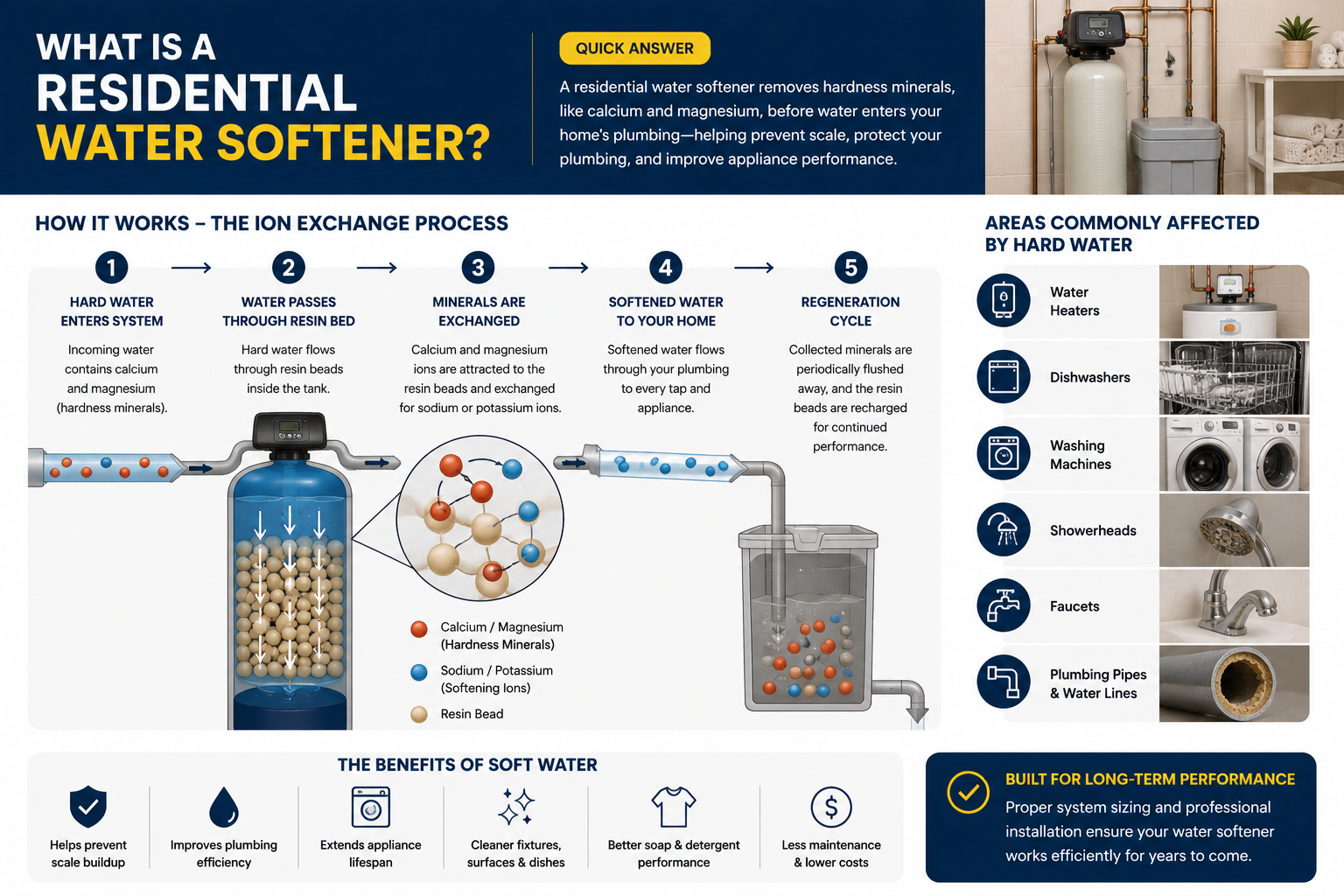
A residential water softener is a water treatment system that removes hardness minerals, primarily calcium and magnesium, before water enters a home’s plumbing system. By reducing the levels of these minerals, a water softener installation helps minimize scale buildup, protect plumbing components, and improve the performance of household appliances.
Hard water is not considered unsafe for everyday use. However, the minerals it contains gradually accumulate inside plumbing systems over time.
As water flows through pipes and appliances, dissolved calcium and magnesium begin forming hard mineral deposits known as scale. These deposits continue to accumulate with daily water use, leading to restrictions that reduce plumbing efficiency.
Common areas affected include:
- Water heaters
- Dishwashers
- Washing machines
- Showerheads
- Faucets
- Plumbing pipes
- Water supply lines
A residential water softener installation service helps interrupt this process before scale begins to accumulate throughout the home’s plumbing system.
Most modern residential systems operate through an ion exchange process. As hard water passes through a resin bed inside the unit, calcium and magnesium ions are exchanged for sodium or potassium ions. The softened water then flows throughout the home’s plumbing system while the collected minerals are periodically flushed away during the regeneration cycle.
Although the technology is straightforward, selecting the correct system capacity and ensuring proper installation are essential for reliable long-term performance.
Why Residential Water Softener Installation Matters
Hard water often goes unnoticed until plumbing problems begin to appear. Mineral deposits gradually build up inside pipes, fixtures, water heaters, and household appliances, reducing efficiency long before visible signs appear. What starts as a minor inconvenience can eventually lead to restricted water flow, higher maintenance costs, and premature appliance replacement.
Residential water softener installation addresses these challenges by removing excess calcium and magnesium before water travels throughout the home’s plumbing system. By reducing mineral buildup, a properly installed water softener helps preserve plumbing performance while supporting the long-term reliability of water-using appliances.
Across many Ontario communities, hard water is a common characteristic of municipal water supplies. Homes in areas such as Richmond Hill, Aurora, Markham, Vaughan, and Newmarket often experience varying levels of water hardness. This makes home water softener installation an increasingly popular plumbing upgrade.
Beyond improving water quality, residential water softener services help support:
- Reduced scale buildup inside plumbing pipes
- Longer appliance lifespan
- Improved water flow
- Cleaner faucets and fixtures
- Better soap and detergent performance
- Lower long-term plumbing maintenance
A professionally completed water softener installation service also ensures the system is properly sized, installed in accordance with Ontario plumbing requirements, and configured to match the home’s daily water usage.
Understanding Hard Water in Ontario Homes
Many homeowners first recognize hard water by white deposits around faucets or cloudy residue on glassware. These visible signs are often only a small indication of what is happening inside the plumbing system.
Ontario’s municipal water naturally contains dissolved minerals that are collected as groundwater and surface water move through limestone and other mineral-rich geological formations. While treatment facilities ensure drinking water meets safety standards, naturally occurring calcium and magnesium typically remain in the water supply.
The concentration of these minerals varies by municipality, meaning some communities experience harder water than others. Homes throughout Canada frequently benefit from installing a water softener due to the mineral content in local water supplies.
As hard water circulates through household plumbing every day, scale gradually accumulates on internal pipe surfaces, heating elements, and plumbing fixtures. The process is slow, but the effects become more noticeable over time.
Hard water commonly contributes to:
- Mineral buildup inside plumbing pipes
- Reduced efficiency of water heaters
- Lower water flow through fixtures
- Soap scum on showers and sinks
- White spots on dishes and glassware
- Increased wear on water-using appliances
- Additional plumbing maintenance over time
Water softener installation service helps reduce these long-term effects by treating water before it reaches the home’s plumbing system. Rather than removing existing scale, installing a residential water softener helps prevent additional mineral deposits from forming. This allows plumbing systems and appliances to operate more efficiently over time.
This proactive approach often helps homeowners reduce maintenance requirements while extending the service life of plumbing components throughout the property.
Signs a Home Needs Water Softener Installation
Quick Answer
A home may benefit from a residential water softener installation if hard water is causing mineral buildup on fixtures, reduced appliance efficiency, soap residue, or recurring plumbing maintenance. These signs often develop gradually as calcium and magnesium accumulate throughout the plumbing system.
Hard water problems rarely appear overnight. Mineral deposits build over months and years, making the early warning signs easy to overlook. Recognizing these indicators early allows homeowners to address water quality before scale buildup affects plumbing performance and household appliances.
Some of the most common signs include:
- White or chalky deposits around faucets and showerheads
- Spots remaining on dishes and glassware after washing
- Soap that is difficult to rinse away
- Reduced water pressure at plumbing fixtures
- Appliances requiring more frequent maintenance
- Scale buildup inside kettles and coffee makers
- Soap scum accumulating on sinks, tubs, and shower walls
Many of these issues stem from the same source: dissolved calcium and magnesium remaining in the water supply after municipal treatment.
As hard water flows through plumbing pipes, minerals gradually accumulate on pipe walls, valves, water heaters, and fixtures. Heating water accelerates this process, which is why water heaters often experience some of the greatest scale accumulation.
While cleaning products may temporarily remove visible mineral deposits, they do not address minerals that continuously flow through the home’s plumbing system. Residential water softener installation helps reduce future scale formation by treating the water before it reaches plumbing fixtures and appliances.
Benefits of Residential Water Softener Installation
Installing a residential water softener provides benefits that extend well beyond improving the appearance of sinks and faucets. By reducing the amount of calcium and magnesium entering the home’s plumbing system, softened water helps protect plumbing infrastructure while supporting the efficiency of water-using appliances.
One of the most significant advantages is the reduction of scale buildup in plumbing pipes. Mineral deposits narrow the interior diameter of pipes over time, restricting water flow and placing additional strain on the plumbing system. Softened water slows this accumulation, helping maintain more consistent water delivery throughout the home.
Water heaters also benefit from softer water. Scale collecting on heating elements forces the appliance to work harder to produce hot water, increasing energy consumption and contributing to premature wear. Reducing mineral buildup allows water heaters to operate more efficiently over their service life.
Additional benefits include:
- Longer lifespan for plumbing fixtures
- Improved efficiency of dishwashers and washing machines
- Cleaner sinks, faucets, and shower doors
- Reduced soap scum and mineral residue
- Better performance from soaps and detergents
- Less frequent plumbing maintenance
- Improved long-term plumbing reliability
Softened water also helps preserve the appearance of kitchen and bathroom fixtures by reducing the white mineral stains commonly associated with hard water. Cleaning often becomes easier because soap dissolves and rinses more effectively.
Although every home’s water conditions differ, residential water softener services provide a practical, long-term solution for minimizing the impact of hard water on plumbing systems and household appliances.
How Residential Water Softener Installation Works
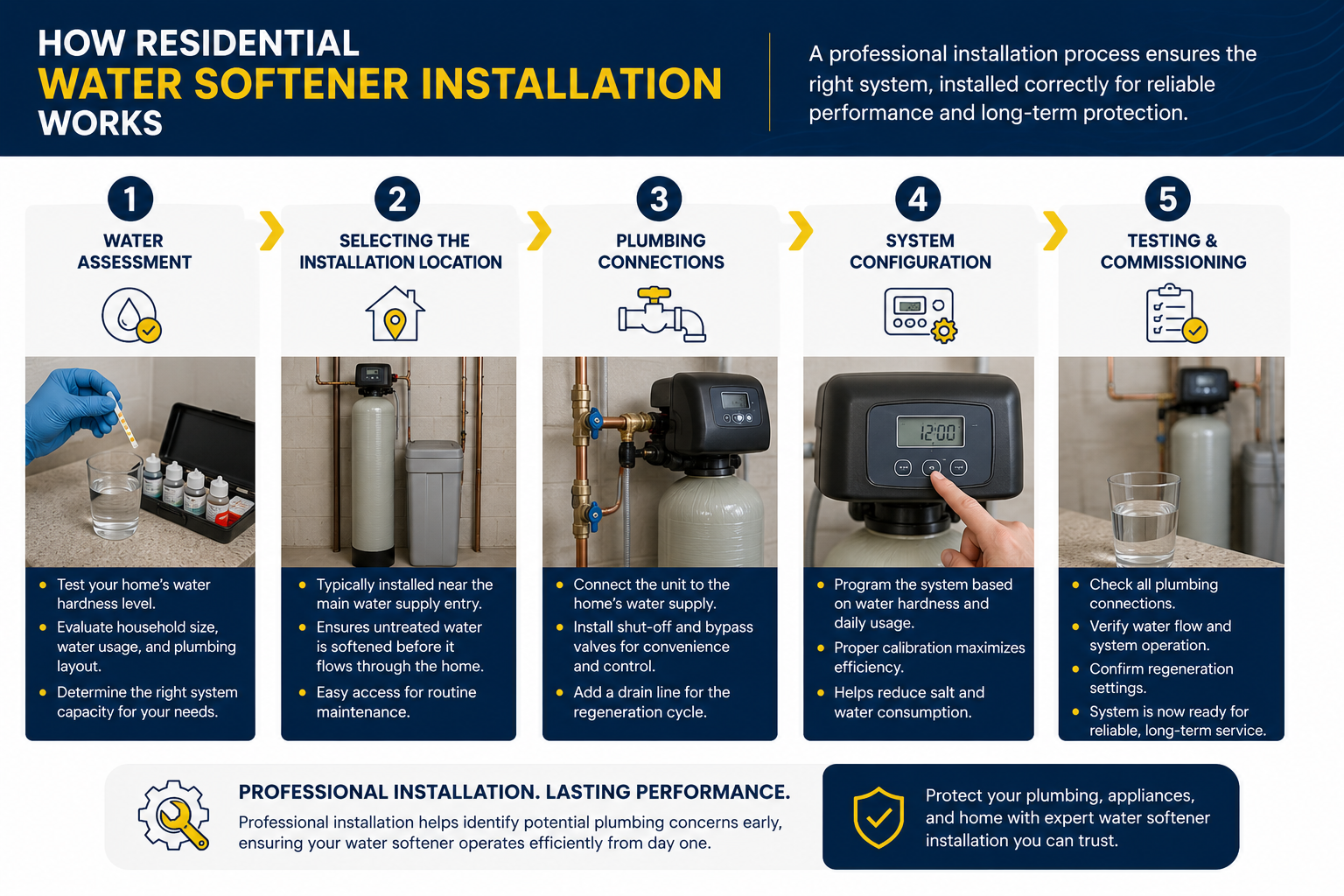
A successful residential water softener installation begins with understanding the home’s water usage and hardness level. Proper system sizing ensures the equipment can meet daily water demand while maintaining consistent performance over time.
Although installation requirements vary slightly between properties, most residential water softener installation services follow a similar process.
1. Water Assessment
The installation begins with evaluating the home’s water hardness and identifying the most suitable system capacity. Household occupancy, water consumption, and plumbing layout all influence equipment selection.
2. Selecting the Installation Location
Water softeners are typically installed near the main water supply where untreated water first enters the home. This location allows softened water to circulate throughout the plumbing system while maintaining convenient access for routine maintenance.
3. Plumbing Connections
The installer connects the unit to the home’s water supply using shut-off valves and a bypass valve. A drain connection is also installed to support the regeneration cycle.
4. System Configuration
Once installed, the water softener is programmed according to the household’s water hardness and expected daily usage. Proper calibration helps maximize efficiency while minimizing salt and water consumption.
5. Testing and Commissioning
The final step involves checking plumbing connections, verifying water flow, confirming regeneration settings, and ensuring the system operates correctly before being placed into regular service.
A professionally completed water softener installation service also allows installers to identify any existing plumbing concerns that could affect long-term performance, helping ensure the system operates efficiently from day one.
Choosing the Right Residential Water Softener
Selecting the right water softener involves more than simply choosing the largest available unit. A system that is too small may regenerate too frequently and struggle to keep up with household demand, while an oversized system can unnecessarily increase water and salt consumption. Proper sizing helps ensure consistent performance, efficient operation, and long-term reliability.
Several factors influence which system is best suited for a home, including:
- Household size
- Daily water usage
- Water hardness level
- Number of bathrooms
- Existing plumbing layout
- Available installation space
Most residential water softeners use an ion exchange process to remove calcium and magnesium from the water supply. However, the way each system is configured can vary depending on household requirements.
Salt-Based Water Softeners
Salt-based systems are the most common choice for residential water softener installation. They remove hardness minerals through ion exchange and are well suited for homes with moderate to high levels of hard water.
Dual-Tank Water Softeners
Homes with higher water consumption may benefit from dual-tank systems. While one tank regenerates, the second continues to supply softened water, ensuring uninterrupted operation during periods of increased demand.
Compact Water Softeners
Some homes have limited installation space. Compact systems offer many of the same benefits while fitting into smaller utility rooms, mechanical areas, or basements.
Beyond selecting the equipment itself, professional system sizing helps ensure the water softener matches the home’s actual water usage rather than relying solely on manufacturer specifications.
A properly sized residential water softener installation can help improve efficiency, reduce operating costs, and provide consistent soft water throughout the home.
Choosing the Right Water Softener
| Household Size | Typical Water Usage | Recommended System Capacity |
| 1–2 people | Low | Compact Residential System |
| 3–4 people | Moderate | Standard Residential System |
| 5+ people | High | High-Capacity or Dual-Tank System |
Maintaining a Residential Water Softener
A residential water softener requires routine maintenance to continue operating efficiently. While modern systems are designed for reliable long-term performance, regular servicing helps:
- Maintain water quality
- Reduce wear on system components
- Extend the lifespan of the equipment.
One of the most important maintenance tasks is monitoring the salt level inside the brine tank. Salt is essential for the regeneration process that restores the resin’s ability to remove hardness minerals from the water supply.
Homeowners should also periodically inspect the system for signs of wear, unusual water usage, or changes in water quality.
Routine maintenance often includes:
- Refilling the brine tank with the appropriate type of salt
- Cleaning the brine tank when necessary
- Inspecting valves and plumbing connections
- Confirming regeneration settings remain accurate
- Checking for salt bridges or blockages
- Scheduling periodic professional inspections
Although many maintenance tasks are straightforward, professional servicing provides an opportunity to verify that the system continues operating as intended. It also helps ensure that no plumbing issues have developed since installation.
Regular inspections can also identify small issues, such as plumbing scale, before they affect system performance or lead to unnecessary repairs.
Factors That Influence Residential Water Softener Installation
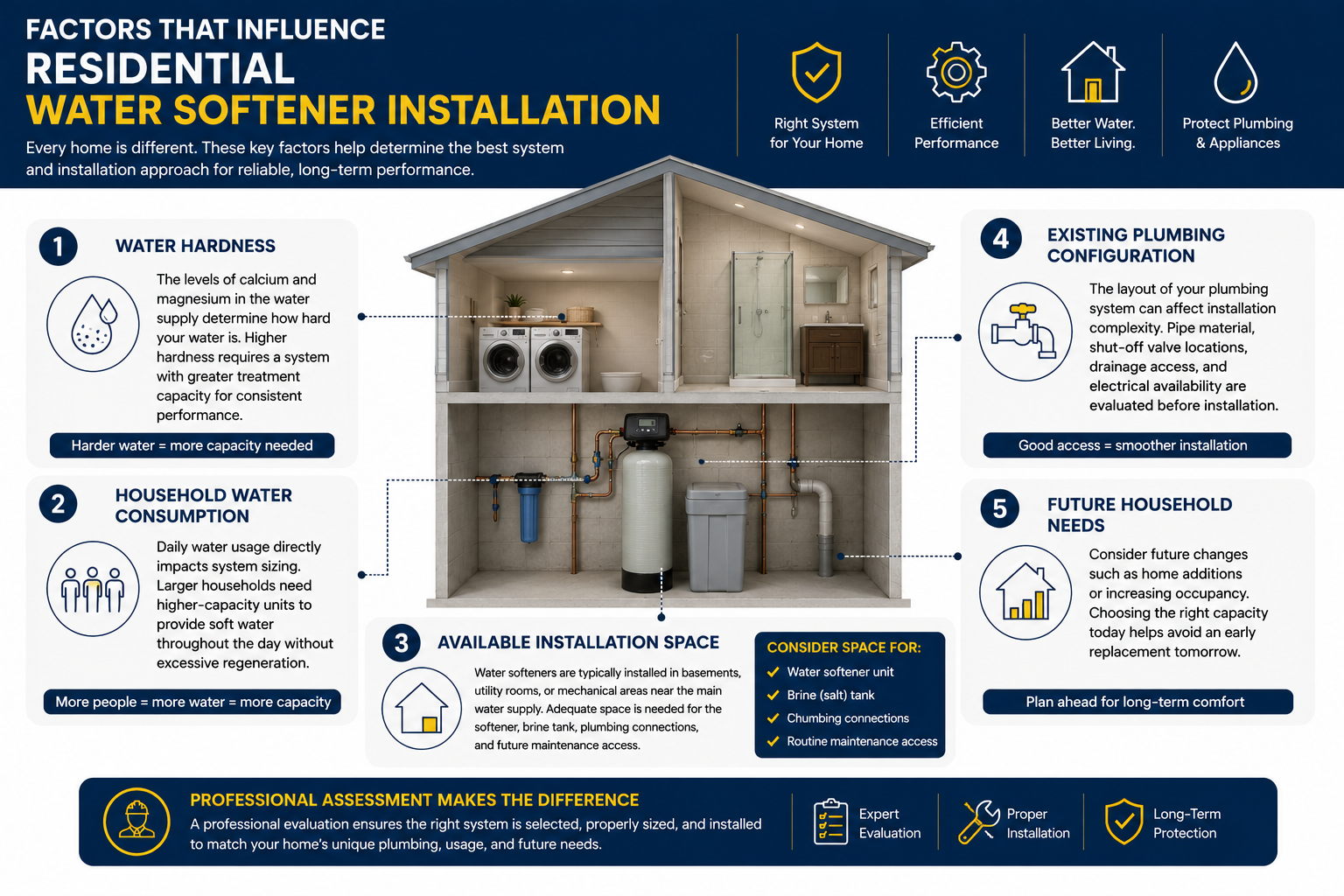
Every home has unique plumbing requirements, which means no two water softener installations are exactly alike. Several factors influence the type of system to install, where to locate it, and the work required to integrate it with the existing plumbing system.
Understanding these considerations helps homeowners prepare for the installation process while ensuring the selected system aligns with the property’s water usage and plumbing configuration.
Water Hardness
The levels of calcium and magnesium in the water supply are among the most important considerations when selecting a residential water softener. Homes with higher hardness levels typically require systems with greater treatment capacity to maintain consistent performance.
Household Water Consumption
Daily water usage directly affects system sizing. Larger households generally require higher-capacity units that can supply softened water throughout the day without excessive regeneration cycles.
Available Installation Space
Residential water softeners are commonly installed in basements, utility rooms, or mechanical areas near the main water supply. Adequate space is needed for the softener, brine tank, plumbing connections, and future maintenance access.
Existing Plumbing Configuration
The layout of the home’s plumbing system can influence installation complexity. Factors such as pipe material, shut-off valve locations, drainage access, and available electrical connections are evaluated before installation begins.
Future Household Needs
Many homeowners also consider future changes, such as home additions or increasing occupancy. Selecting a system with sufficient capacity helps support long-term plumbing performance without requiring an early replacement.
A professional assessment helps determine the most appropriate solution based on the home’s current requirements while considering future water demands.
Why Hard Water Prevention Is Better Than Plumbing Repairs
Hard water problems often develop gradually. Mineral deposits accumulate gradually, making the effects easy to overlook until plumbing performance begins to decline or household appliances require unexpected repairs.
Taking steps to reduce scale buildup before it becomes significant can help minimize many of these long-term issues.
Preventing excessive mineral accumulation may help:
- Maintain consistent water flow through plumbing pipes
- Reduce scale buildup inside water heaters
- Improve appliance efficiency
- Minimize mineral deposits on plumbing fixtures
- Reduce the frequency of plumbing maintenance
- Extend the service life of water-using appliances
Although a water softener cannot remove scale that has already formed inside older plumbing systems, it can help reduce future mineral accumulation. This allows plumbing components to continue operating under more consistent conditions while helping protect future investments in household appliances.
For homeowners planning renovations or replacing major plumbing equipment, installing a water softener at the same time may also help protect newly installed fixtures and appliances from the effects of hard water.
Why Professional Residential Water Softener Installation Matters
Installing a water softener involves more than connecting a new appliance to the home’s plumbing system. Proper installation helps ensure the equipment operates efficiently, complies with Ontario plumbing requirements, and delivers reliable performance for years to come.
Every home has unique plumbing conditions. Water pressure, available installation space, drain locations, and plumbing configuration all influence how a water softener should be installed.
Professional installation begins with evaluating these conditions before selecting the appropriate system size and installation method.
A professional residential water softener installation service helps provide:
- Accurate system sizing
- Proper plumbing connections
- Secure bypass valve installation
- Correct drain configuration
- Efficient system programming
- Leak testing before operation
- Compliance with applicable plumbing standards
Professional installation also helps reduce the likelihood of problems arising from improperly connected plumbing, inadequate drainage, or incorrect system configuration.
Choosing a licensed plumbing contractor provides added confidence that the installation adheres to accepted industry practices and protects the long-term performance of both the water softener and the home’s plumbing system.
Common Questions About Residential Water Softener Installation
How long does residential water softener installation take?
Most residential installations can be completed within several hours, although installation time depends on the home’s plumbing configuration, the selected system, and whether additional plumbing modifications are required.
Does a water softener improve water pressure?
A water softener does not directly increase water pressure. However, reducing future scale buildup inside plumbing pipes can help maintain more consistent water flow over time.
How often does a water softener require maintenance?
Most systems benefit from regular salt replenishment and periodic inspections. Professional maintenance intervals vary depending on water usage, water hardness, and the manufacturer’s recommendations.
Where is a residential water softener usually installed?
Most systems are installed near the main water supply where water first enters the home. Common installation locations include basements, utility rooms, and mechanical areas with access to plumbing and drainage.
How long does a residential water softener last?
With proper installation and routine maintenance, many residential water softeners provide reliable service for well over a decade. Actual lifespan depends on water quality, system usage, and ongoing maintenance.
Why Homeowners Choose J.A. Plumbing Inc. for Residential Water Softener Installation
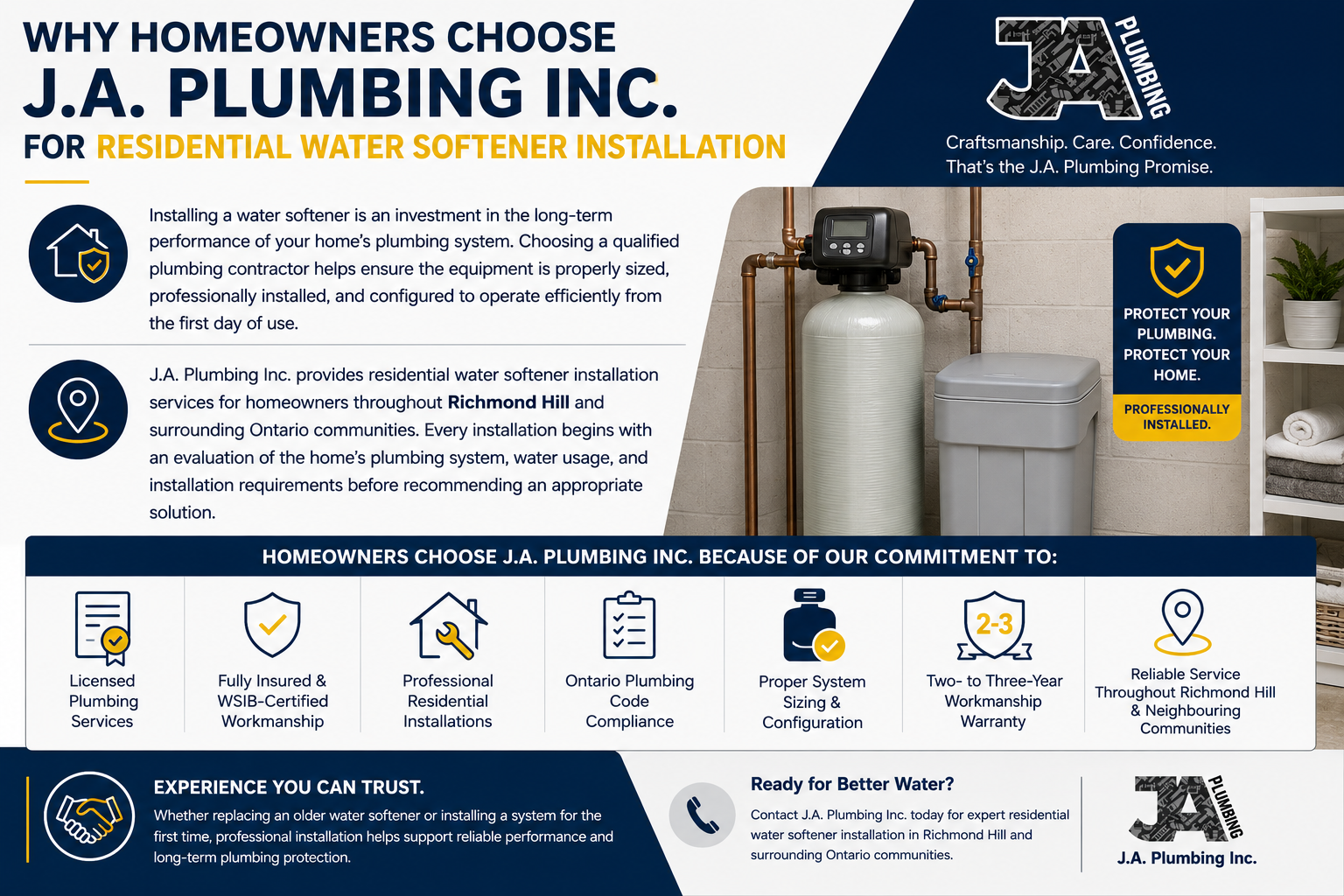
Installing a water softener is an investment in the long-term performance of a home’s plumbing system. Choosing a qualified plumbing contractor helps ensure the equipment is properly sized, professionally installed, and configured to operate efficiently from the first day of use.
J.A. Plumbing Inc. provides residential water softener installation services for homeowners throughout Richmond Hill and surrounding Ontario communities. Every installation begins with an evaluation of the home’s plumbing system, water usage, and installation requirements, followed by a recommendation of an appropriate solution.
Homeowners choose J.A. Plumbing Inc. because of its commitment to:
- Licensed plumbing services
- Fully insured and WSIB-certified workmanship
- Professional residential installations
- Ontario plumbing code compliance
- Proper system sizing and configuration
- Two- to three-year workmanship warranty
- Reliable service throughout Richmond Hill and neighbouring communities
Whether replacing an older water softener or installing a system for the first time, professional installation helps support reliable performance and long-term plumbing protection.
Support Healthier Plumbing with Residential Water Softener Installation
Hard water affects more than the appearance of faucets and fixtures. Over time, mineral deposits can reduce plumbing efficiency, increase maintenance requirements, and shorten the lifespan of household appliances. A properly sized residential water softener helps address these challenges by reducing the minerals responsible for scale buildup before water circulates through the home’s plumbing system.
Understanding how water softeners work, recognizing the signs of hard water, and choosing professional installation are important steps toward protecting residential plumbing infrastructure for years to come.
If hard water is affecting a home’s plumbing system, contact J.A. Plumbing Inc. to learn more about professional residential water softener installation services throughout Richmond Hill and surrounding communities in Ontario.
Frequently Asked Questions
How can hard water affect a home's plumbing system?
Hard water can cause mineral deposits to accumulate inside plumbing pipes, water heaters, faucets, and water-using appliances. Over time, this buildup may restrict water flow, reduce appliance efficiency, and increase maintenance requirements.
How long does residential water softener installation take?
Most residential water softener installations can be completed within a few hours. Installation time depends on factors such as the home's plumbing layout, the location of the main water supply, and whether modifications to existing plumbing are required.
Where is a water softener typically installed in a home?
A water softener is usually installed near the point where the main water line enters the home. Common installation locations include basements, utility rooms, garages, or mechanical rooms that provide access to plumbing, drainage, and electrical connections.
How often does a residential water softener require maintenance?
Routine maintenance generally includes checking and refilling the brine tank with salt, inspecting the system for proper operation, and scheduling periodic professional servicing. Maintenance frequency varies depending on water hardness, household water usage, and the type of system installed.
How long does a residential water softener last?
With proper maintenance and professional installation, many residential water softeners provide reliable performance for 10 to 15 years or longer. Regular servicing and timely replacement of worn components can help maximize the system's lifespan.
Why should a licensed plumber install a residential water softener?
A licensed plumber can properly size the system, integrate it with the home's plumbing, install the necessary bypass and drain connections, and ensure the installation complies with Ontario plumbing requirements. Professional installation also helps support reliable system performance and protects the manufacturer's warranty where applicable.