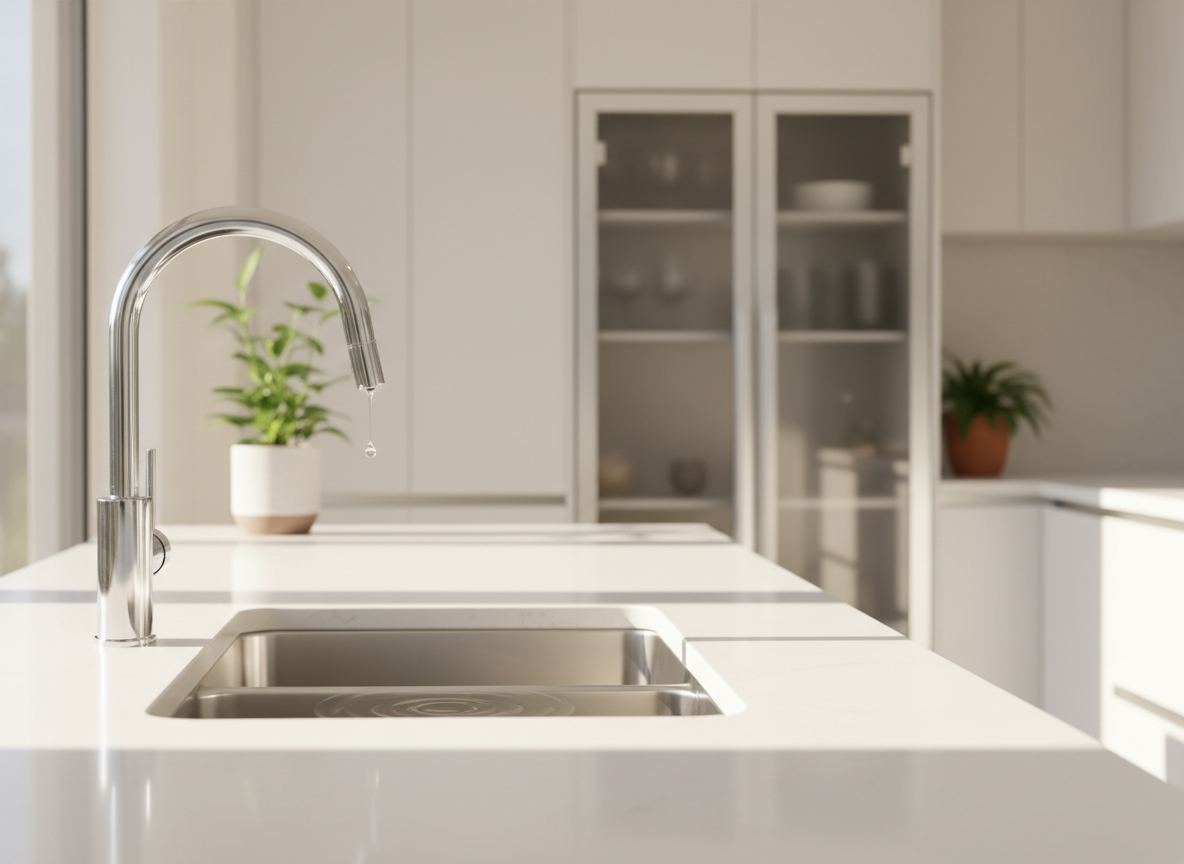
A dripping kitchen faucet may seem like a minor annoyance, but small leaks often signal larger plumbing issues developing behind the scenes. What starts as an occasional drip can lead to wasted water, higher utility bills, moisture damage, and premature wear on plumbing fixtures. Many homeowners delay repairs because the leak appears insignificant, only to face more expensive repairs later.
Understanding the common causes of faucet leaks allows homeowners to act early and avoid unnecessary damage. Professional residential faucet repair helps identify the source of the problem and restore reliable performance before minor issues become major concerns.
Why does my kitchen faucet keep dripping after I turn it off?
A kitchen faucet may continue dripping due to worn washers, damaged cartridges, loose internal components, or mineral buildup caused by hard water. Identifying the source early can help prevent further wear and water waste.
When should a leaking kitchen faucet be repaired by a plumber?
Professional repair is recommended when leaks persist, water pressure drops, corrosion appears, or moisture begins collecting around the fixture or under the sink. Early repairs often prevent larger plumbing issues and property damage.
Why Kitchen Faucet Leaks Should Never Be Ignored
Kitchen faucets are among the most frequently used fixtures in any home. Daily use places constant stress on internal components, causing wear over time.
Ignoring a leak can result in:
- Increased water bills
- Damage to cabinets and countertops
- Reduced fixture efficiency
- Mineral buildup around faucets
- Unnecessary strain on plumbing components
Addressing leaks early with residential faucet repair often prevents larger and more costly plumbing problems.
Common Causes of Kitchen Faucet Leaks
Several factors can contribute to a leaking kitchen faucet. Understanding these causes helps determine the most appropriate repair approach.
Worn Washers and Seals
Washers and seals create watertight connections inside the faucet. After years of regular use, these components can become worn, flattened, or damaged.
Once the seal weakens, water may continue to drip even when the faucet is fully turned off.
Damaged Faucet Cartridges
Modern faucets often use cartridges to control water flow and temperature. Over time, cartridges can wear out due to friction, mineral deposits, or normal aging.
A damaged cartridge may cause:
- Persistent dripping
- Inconsistent water flow
- Difficulty adjusting the temperature
Replacing the cartridge often resolves the issue without replacing the entire fixture.
Loose Plumbing Connections
Kitchen faucets rely on multiple connections beneath the sink. Supply lines, fittings, and mounting hardware can loosen over time due to vibration and daily use.
Even a small gap in these connections can allow water to escape, causing moisture damage under the sink.
Hard Water Mineral Buildup
Many homes throughout Richmond Hill and the Greater Toronto Area experience hard water conditions. Minerals such as calcium and magnesium gradually accumulate inside faucet components.
This buildup can:
- Restrict water flow
- Interfere with moving parts
- Accelerate the wear on internal components
- Contribute to leaks
Regular maintenance helps reduce the impact of mineral deposits.
Warning Signs That Require Prompt Attention
Leaks are not always limited to visible dripping. Homeowners should watch for additional warning signs that may indicate developing faucet problems.
Common indicators include:
- Water pools around the faucet base
- Reduced water pressure
- Unusual sounds when operating the faucet
- Stiff or difficult handle movement
- Rust or corrosion around fixture components
- Moisture inside cabinets beneath the sink
Professional faucet repair services can identify the root cause of these symptoms and prevent further damage.
How Homeowners Can Address Faucet Leaks Early
Early action is often the most effective way to avoid larger plumbing expenses.
Helpful preventative measures include:
- Addressing leaks as soon as they appear
- Cleaning visible mineral buildup regularly
- Monitoring water pressure levels
- Inspecting under-sink connections periodically
- Scheduling plumbing inspections when recurring issues occur
Taking these steps helps maintain fixture performance and extend faucet lifespan.
When Professional Repairs Make More Sense
While homeowners can perform some minor maintenance tasks, many faucet leaks originate from internal components that require proper diagnosis.
Professional plumbers evaluate:
- The source of the leak
- Fixture condition
- Internal component wear
- Water pressure concerns
- Potential hidden damage
This comprehensive assessment helps determine whether repair or replacement offers the best long-term solution.
Also Read:
How Licensed Plumbers Install and Repair Wall-Mounted Faucets
The Smart Way to Decide Between Residential Faucet Repair and Replacement
Local Residential Faucet Repair: Quick Fixes Every Homeowner Should Know
Preventing Bigger Plumbing Problems Starts with Early Action
A kitchen faucet leak rarely resolves itself. Small drips often indicate underlying wear that can gradually affect surrounding surfaces and plumbing components. Early repairs help protect fixtures, reduce water waste, and prevent costly damage throughout the home.
J.A. Plumbing Inc., based in Richmond Hill and serving the Greater Toronto Area, provides dependable plumbing assessments backed by a market-leading 2- to 3-year warranty. Fully insured and WSIB-certified, the team also offers a 2-hour emergency response during working hours for urgent plumbing issues. Homeowners looking for local residential faucet repair can contact J.A. Plumbing Inc. for professional inspections that address leaks before they become larger plumbing concerns.