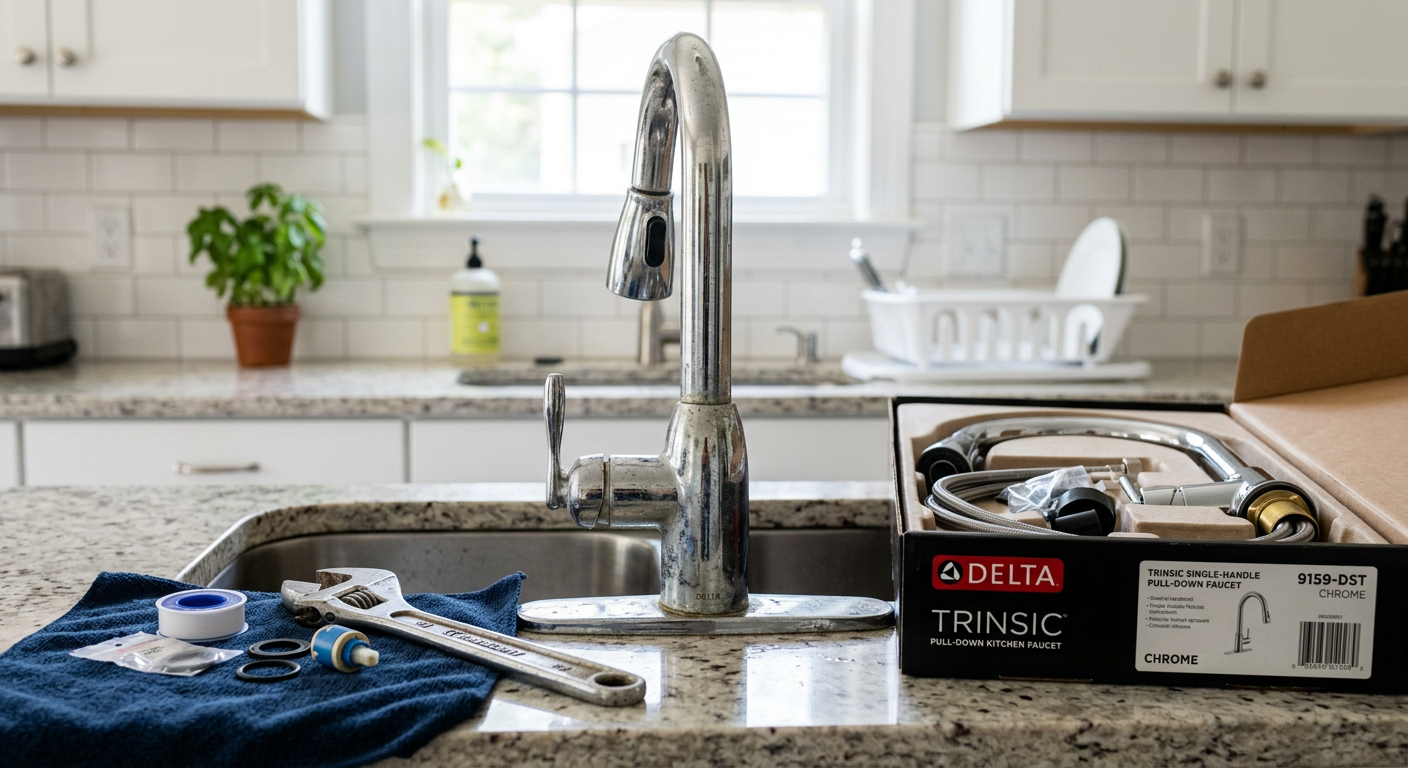
A dripping faucet rarely stays just a drip. What starts as a minor leak often turns into higher water bills, cabinet damage, and reduced water pressure. Many homeowners face the same question: Is residential faucet repair enough, or is replacement the smarter move?
Making the right call matters. The wrong decision can mean repeated service visits, unnecessary expenses, or long-term plumbing damage. The right decision restores efficiency, protects fixtures, and keeps household plumbing systems running smoothly.
This guide explains how to evaluate whether to repair or replace a faucet in a practical, cost-aware way.
People Also Ask
How long does a residential faucet typically last?
Most faucets last 10 to 15 years, depending on usage, water quality, and maintenance. Hard water and frequent daily use may shorten lifespan. Regular inspection helps extend performance and detect wear early.
Is it cheaper to repair a faucet or replace it?
Repair is cheaper when the issue involves small components like washers or cartridges. Replacement becomes more cost-effective when corrosion, repeated leaks, or multiple part failures occur within a short period.
Signs a Faucet Can Be Repaired
Not every faulty fixture requires replacement. In many cases, residential faucet repair effectively resolves the issue and extends the fixture’s lifespan.
Minor Leaks from Worn Components
Most drips result from:
- Worn-out washers
- Damaged O-rings
- Cartridge issues
- Loose internal seals
These parts are inexpensive and can often be replaced without removing the entire unit.
Stable Fixture Structure
If the faucet body is solid and corrosion-free, repair usually makes sense. Surface buildup or mineral deposits can also be cleaned and restored.
Water Pressure Issues Linked to Aerators
Reduced water flow does not always signal a failing faucet. Blocked aerators or sediment buildup may restrict pressure. Cleaning or replacing the aerator often restores performance.
No Visible Rust or Cracks
Structural integrity is critical. When the housing, handle base, and mounting hardware remain intact, repair provides a practical solution.
No Recurring Service History
If the faucet has not required repeated service calls, a single residential faucet repair may resolve the issue in the long term.
Signs It’s Time to Replace a Faucet
Some problems indicate deeper wear that repair cannot reliably solve.
Persistent Leaks After Repair
If dripping continues after part replacement, internal valve wear or damage to the faucet body may be present. Ongoing leaks waste water and increase utility costs.
Visible Corrosion or Structural Damage
Rust, cracking, or weakened metal often signals end-of-life failure. Corrosion can spread internally, compromising water quality.
Frequent Repairs in Short Timeframes
Multiple repair visits in one or two years typically cost more than installing a new fixture.
Outdated Design and Inefficient Water Use
Older faucets may:
- Lacks water-saving features
- Deliver inconsistent flow
- Increase overall consumption
Modern fixtures reduce water waste and improve performance.
Plumbing Compatibility Issues
Renovations or pipe updates sometimes reveal mismatched fittings or mounting issues. Replacement ensures proper integration with updated plumbing systems.
Repair vs Replacement Cost Comparison
Cost plays a major role in choosing between faucet repair services and a complete replacement.
When Repair Is More Cost-Effective
Residential faucet repair is usually economical when:
- The issue involves a single component
- The fixture is relatively new
- No corrosion or structural damage is present
- Repairs generally involve labour plus small replacement parts.
When Replacement Becomes the Better Investment
Replacement makes financial sense when
- Repair costs approach half the price of a new unit
- The faucet requires multiple part replacements
- Labour costs increase due to repeated service
While installation requires a higher upfront cost, it may eliminate recurring maintenance expenses.
Long-Term Value Considerations
Replacement may reduce:
- Water waste
- Ongoing service calls
- Risk of cabinet or countertop damage
In homes with inefficient plumbing or drainage, upgrading fixtures can improve overall system performance.
Hidden Risks of Delaying the Right Decision
Postponing action creates greater problems, while prompt evaluation prevents further damage.
- Cabinet and Countertop Damage: Slow leaks often travel beneath sinks. Over time, moisture damages wood framing and cabinetry.
- Mould and Mildew Growth: Persistent dampness encourages mould growth in enclosed spaces.
- Increased Water Bills: Even a slow drip can waste significant water annually.
- Pressure Imbalance: Faulty faucets sometimes indicate internal pipe buildup or supply line problems. Ignoring symptoms may strain other plumbing components.
- Escalating Repair Costs: Small mechanical failures often worsen. A washer replacement may later require removal of the entire fixture. Plumbing adjustments may follow.
How Professional Inspection Helps the Decision
Determining whether to repair or replace a faucet is not always straightforward. A structured plumbing inspection clarifies the most practical option.
- Mechanical Assessment: A licensed technician evaluates cartridge condition, internal valve wear, mounting stability, and water supply connections
- Pressure and Flow Testing: Testing identifies whether poor flow stems from the faucet or broader plumbing concerns.
- Leak Source Verification: Moisture detection confirms whether the issue originates from the faucet body, supply lines, or drain assembly.
- Cost Transparency: A clear comparison between residential faucet repair and full replacement allows informed financial planning.
- Code and Warranty Considerations: Modern fixtures must meet current plumbing standards. Professional installation protects warranty coverage and ensures compliance.
Also Read:
Common DIY Faucet Repairs That Go Wrong
How Licensed Plumbers Install and Repair Wall-Mounted Faucets
Local Residential Faucet Repair: Quick Fixes Every Homeowner Should Know
Make the Smart Plumbing Choice
Every plumbing fixture has a service lifespan. The smart approach weighs condition, cost, long-term efficiency, and risk.
Residential faucet repair works well for isolated wear and minor component failures. Replacement becomes practical when corrosion, repeated leaks, or rising repair costs appear.
Homes across Richmond Hill and the Greater Toronto Area benefit from timely evaluation. Small plumbing issues rarely improve on their own.
For a professional assessment and clear guidance, contact J.A. Plumbing Inc. to choose between local residential faucet repair and replacement.