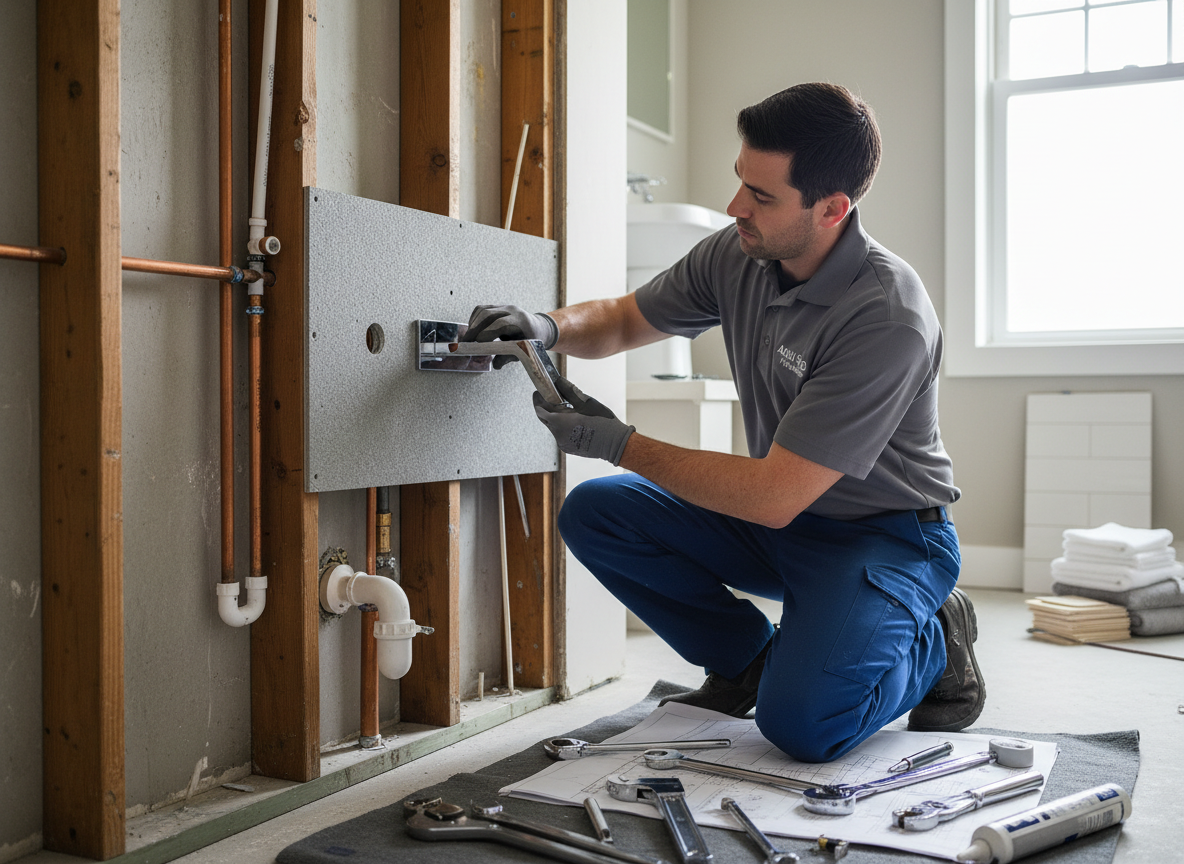
Wall-mounted faucets often appear simple at first glance. When problems occur, the impact is rarely small. Leaks can spread inside walls. Water pressure can drop without warning. Moisture damage can escalate before visible signs appear. These issues disrupt daily routines and increase repair costs if not addressed early.
Wall-mounted faucet repair and installation require an understanding of hidden plumbing connections and internal supply lines. This approach protects surrounding structures, restores proper flow, and reduces the risk of repeat failures.
Understanding how licensed plumbers handle wall-mounted faucet work helps homeowners make informed decisions before minor issues turn into costly repairs.
People Also Ask (PAAs)
1. Why do wall-mounted faucets require licensed plumbing work?
Wall-mounted faucets connect to supply lines within the wall. Licensed plumbers ensure proper alignment, sealing, and pressure control to prevent hidden leaks and damage.
2. What causes wall-mounted faucets to leak behind walls?
Common causes include worn cartridges, loose fittings, pipe movement, and improper installation that allows water to escape into wall cavities.
Why Wall-Mounted Faucets Require Professional Plumbing Expertise
Wall-mounted faucets connect directly to plumbing lines hidden behind finished surfaces. Unlike deck-mounted fixtures, access is limited once walls are closed.
Professional plumbing expertise is required because:
- Supply lines are embedded within wall cavities
- Improper installation can cause concealed leaks
- Repairs often involve opening finished walls
- Alignment errors affect long-term performance
Licensed plumbers adhere to installation and faucet-repair standards that reduce stress on fittings and connections. This prevents movement, vibration, and water damage over time.
Where Wall-Mounted Faucets Are Commonly Used
Wall-mounted faucets stand out for both functional and space-related reasons. They are commonly found in residential spaces where layout efficiency matters.
Typical locations include:
- Bathroom sinks with floating vanities
- Laundry rooms with utility basins
- Kitchen sinks designed for minimal counter clutter
- Basement wash areas with exposed piping
These fixtures are also chosen during renovations where accessibility and clean design are priorities.
Common Problems That Lead to Wall-Mounted Faucet Repairs
Wall-mounted faucet issues often develop gradually. Early signs are easy to overlook until performance declines or damage becomes visible.
Common repair triggers include:
- Dripping from spouts when taps are closed
- Reduced water pressure at the outlet
- Water stains that form behind walls
- Loose faucet bodies or shifting alignment
- Inconsistent hot and cold water delivery
Because these problems occur behind finished surfaces, licensed plumbers assess the full system rather than treating surface symptoms alone.
How Licensed Plumbers Diagnose Wall-Mounted Faucet Issues
Accurate diagnosis is the first step in avoiding unnecessary wall damage. Licensed plumbers follow a structured process before initiating repairs.
This process typically includes:
- Shutting off the water supply to isolate the fixture
- Inspecting visible fittings and spout connections
- Testing pressure balance and flow rates
- Identifying valve cartridge or seal wear
- Assessing pipe stability within the wall
Advanced tools can detect moisture or pressure anomalies without prematurely opening walls. This approach limits disruption while ensuring accurate repairs.
How Licensed Plumbers Repair Wall-Mounted Faucets
Wall-mounted bathroom or kitchen faucet repair requires careful handling to protect both plumbing components and surrounding finishes.
Repair steps often involve:
- Removing the faucet trim and handle assemblies
- Replacing worn cartridges, washers, or seals
- Securing loose fittings within wall cavities
- Resealing connections to prevent future leaks
- Testing pressure and temperature balance
Repairs focus on restoring full functionality while maintaining proper alignment and support behind the wall.
How Licensed Plumbers Install Wall-Mounted Faucets Correctly
Proper installation begins long before mounting the faucet. Licensed plumbers plan placement and piping during rough-in stages to avoid future access issues.
Key installation considerations include:
- Accurate measurement of spout height and reach
- Proper anchoring of supply lines within the framing
- Pressure testing before wall closure
- Ensuring compatibility with sink and basin layouts
- Sealing penetrations to prevent moisture intrusion
This approach ensures stability, consistent flow, and long-term reliability once walls are finished.
Repair vs. Replacement: How Plumbers Decide
Not every wall-mounted faucet issue requires full replacement. Licensed plumbers evaluate several factors before making a recommendation.
Decision criteria often include:
- Age of the existing faucet
- Availability of replacement parts
- Extent of internal corrosion or wear
- Frequency of previous repairs
- Impact on surrounding wall materials
When kitchen or bathroom faucet repairs can restore performance without recurring issues, they work well. Replacement can be necessary when ongoing repairs would increase long-term costs or risk.
Also Read:
Common DIY Faucet Repairs That Go Wrong
Common Reasons for Kitchen Faucet Leaks and How to Fix Them
Local Residential Faucet Repair: Quick Fixes Every Homeowner Should Know
When to Call a Licensed Plumber for Wall-Mounted Faucet Work
Wall-mounted faucets require careful installation and informed repair methods. Hidden plumbing connections increase complexity and risk when handled without proper training. Licensed plumbers apply structured diagnostic steps, controlled repair techniques, and installation practices that protect both plumbing systems and surrounding structures. Delaying professional service increases the risk of structural damage and water loss. Certain signs indicate immediate attention is required.
These include:
- Persistent dripping or hidden leaks
- Sudden pressure drops at the fixture
- Water stains or damp drywall near faucets
- Loose or unstable faucet mounting
- Temperature control issues
Licensed plumbers address these problems early, reducing the scope of repairs and protecting interior finishes. For homeowners dealing with wall-mounted faucet issues, professional service helps restore reliability while preventing avoidable damage.
Contact J.A. Plumbing Inc. for licensed, local residential faucet repair and installation services across the Greater Toronto Area.