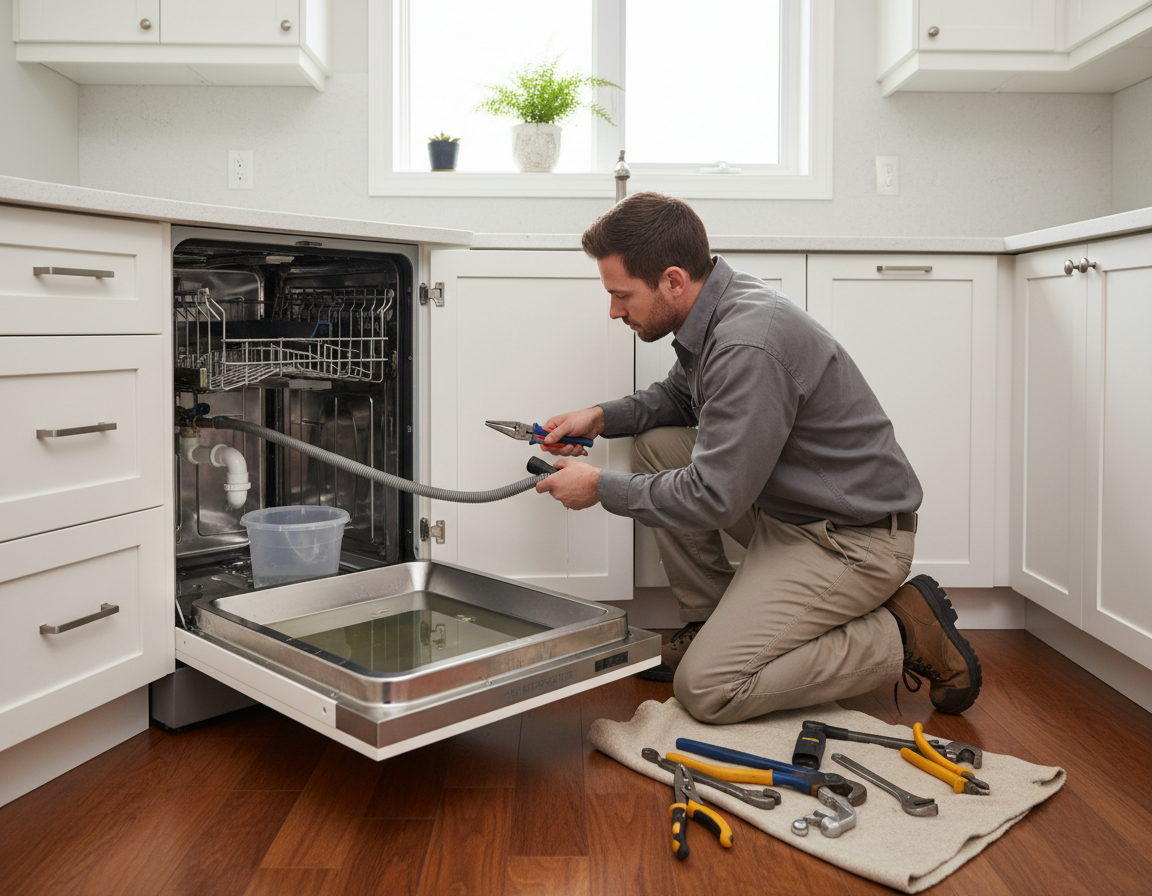
A dishwasher that fails to drain properly can disrupt daily routines faster than expected. Standing water, unpleasant odours, or slow drainage often signal an underlying plumbing issue rather than a simple appliance fault. When left unresolved, these problems can lead to leaks, cabinet damage, and long-term drainage complications within the home. Residential plumbing companies play a key role in identifying the root cause and restoring proper dishwasher drainage before minor issues escalate.
This guide explains how plumbing professionals address dishwasher drainage issues in Canadian homes and why assessment matters.
Understanding Common Dishwasher Drainage Problems
Dishwasher drainage issues rarely stem from a single cause. Residential plumbers typically assess both the appliance connection and the home’s drainage system.
Common issues include:
- Clogged or restricted drain hoses
- Improperly installed air gaps or high loops
- Blockages in the kitchen drain line
- Grease and food debris buildup
- Backflow from shared plumbing lines
These problems often develop gradually, making early signs easy to overlook.
Initial Inspection by Residential Plumbing Companies
Residential plumbing companies begin with a structured inspection to identify where drainage failure occurs.
This assessment usually includes:
- Checking the dishwasher drain hose for kinks or blockages
- Inspecting the connection point at the sink or garbage disposal
- Confirming proper installation height for drainage compliance
- Testing water flow through the kitchen drain line
This step helps determine whether the issue is localized to the dishwasher or tied to a broader residential plumbing concern.
Clearing Blockages in Drain Lines
Blockages remain one of the most common causes of dishwasher drainage issues at home. Food particles, soap residue, and grease can accumulate over time.
Residential plumbers address blockages by:
- Removing debris from drain hoses and fittings
- Clearing kitchen branch lines using professional tools
- Flushing buildup that restricts water movement
- Verifying complete drainage after cleaning
This approach restores normal flow without damaging pipes or appliance components.
Correcting Installation and Venting Issues
Improper installation can prevent dishwasher drainage even when no blockage is present. Residential plumbing repair often involves correcting venting or drainage configurations.
Typical corrections include:
- Adjusting or reinstalling the dishwasher’s high loop
- Installing or repairing air gaps where required by code
- Ensuring secure and leak-free hose connections
- Confirming compliance with local plumbing standards
Correct installation helps prevent backflow and recurring drainage problems.
Preventive Measures to Reduce Future Issues
Beyond immediate repairs, residential plumbing services often recommend preventive measures to reduce the likelihood of dishwasher drainage problems recurring.
Common preventive measures include:
- Periodic kitchen drain cleaning
- Avoiding grease and solid food disposal through sinks
- Monitoring early signs of slow drainage
- Scheduling routine plumbing inspections
These steps help maintain consistent drainage performance over time.
Also Read:
Plumbing Checklist Essentials for Moving Into a New Home
What Hydro Jetting Is and How It Keeps Plumbing Flowing Smoothly
Understanding Residential Backflow Preventers and Why Every Home Needs One
When Professional Residential Plumbing Support Is Needed
Dishwasher drainage issues that persist after basic troubleshooting usually indicate a plumbing-related cause. Residential plumbing companies provide the tools, experience, and system-level insight needed to resolve these problems safely and efficiently.
Involvement of professional residential plumbing reduces the risk of water damage, appliance failure, and recurring drainage issues in the home. For households experiencing ongoing dishwasher drainage problems, contact J.A. Plumbing Inc. to assess and resolve the issue promptly.